
26 April –
26 July 2026
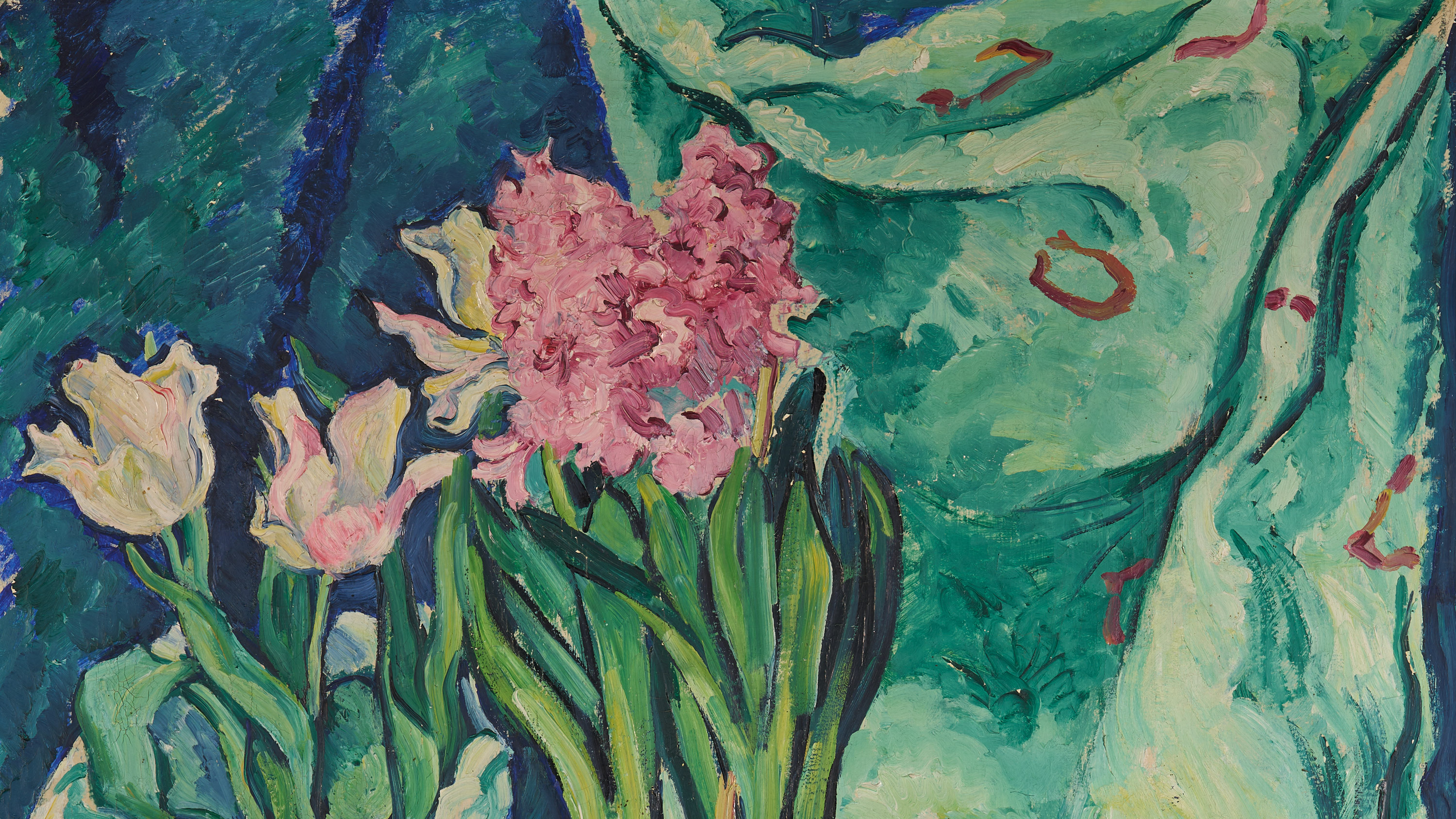
Adolf Erbslöh (1881–1947) is regarded as one of the quiet yet influential artists of the modern era. In his essay Phantasie und Form (Imagination and Form), he formulated his own theory of art, which views imagination not as the antithesis of order, but as its very source. The exhibition Fantasy & Form: Adolf Erbslöh’s Path to Modernism follows this line of thought and invites visitors to rediscover the artist’s distinctive visual language.
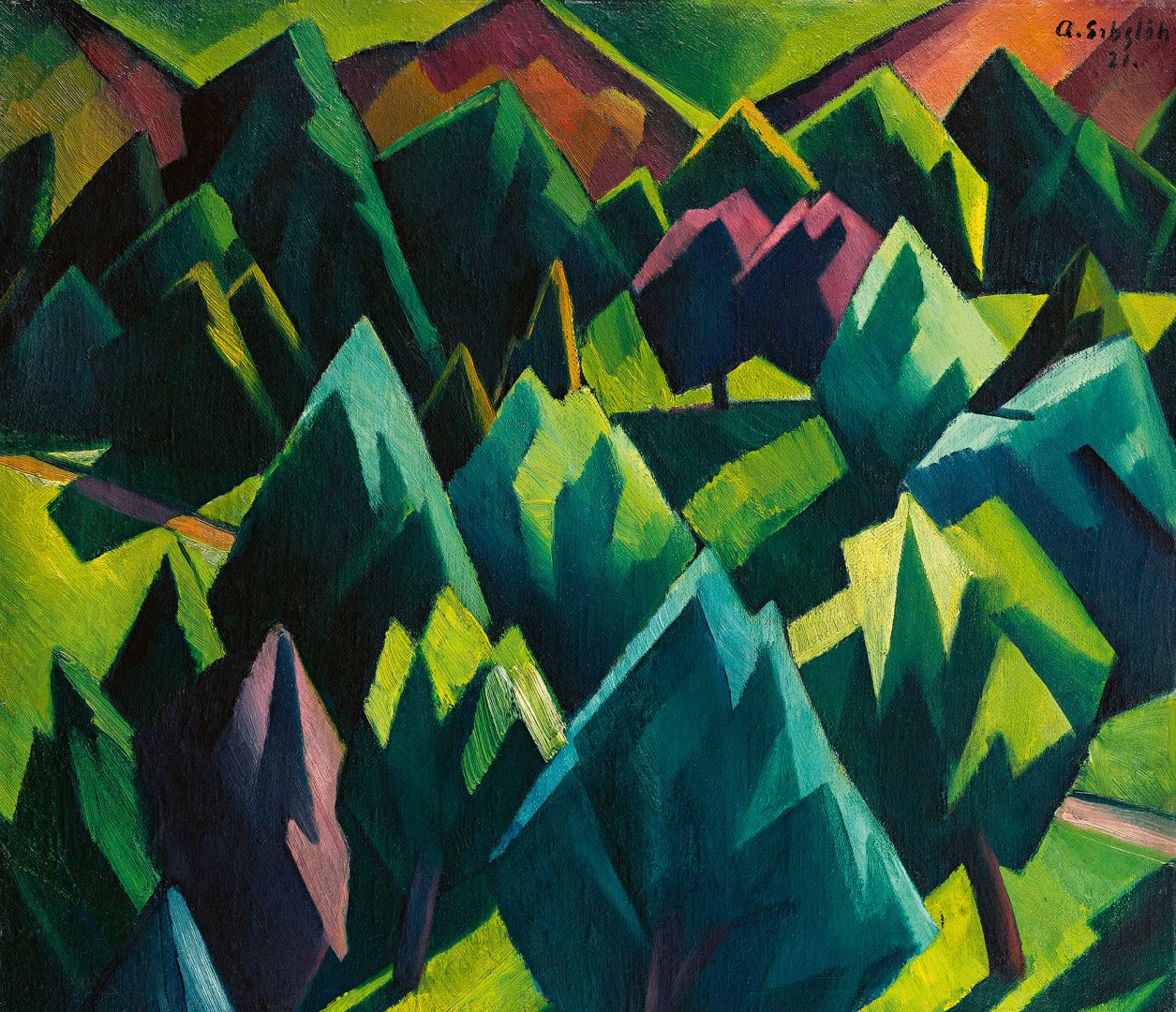
As a co-founder and later chairman of the Neue Künstlervereinigung München (New Artists’ Association of Munich), Erbslöh had a decisive influence on the artistic climate from which the Blauer Reiter emerged. He was no dogmatist of the avant-garde, but a seeker who mediated between the expressive gesture of Expressionism and the clear formal principles of Classical Modernism. In his landscapes, cityscapes and still lifes, imagination becomes a structuring force: luminous colours, clear lines and layered planes are the means of a contemplative gaze.
From his Impressionist beginnings, through his encounter with the art of Paul Cézanne and the Cubists, to the tectonic landscapes of the 1920s, the exhibition explores a central question in his work: how can the fleeting diversity of phenomena be transformed into a lasting pictorial order?
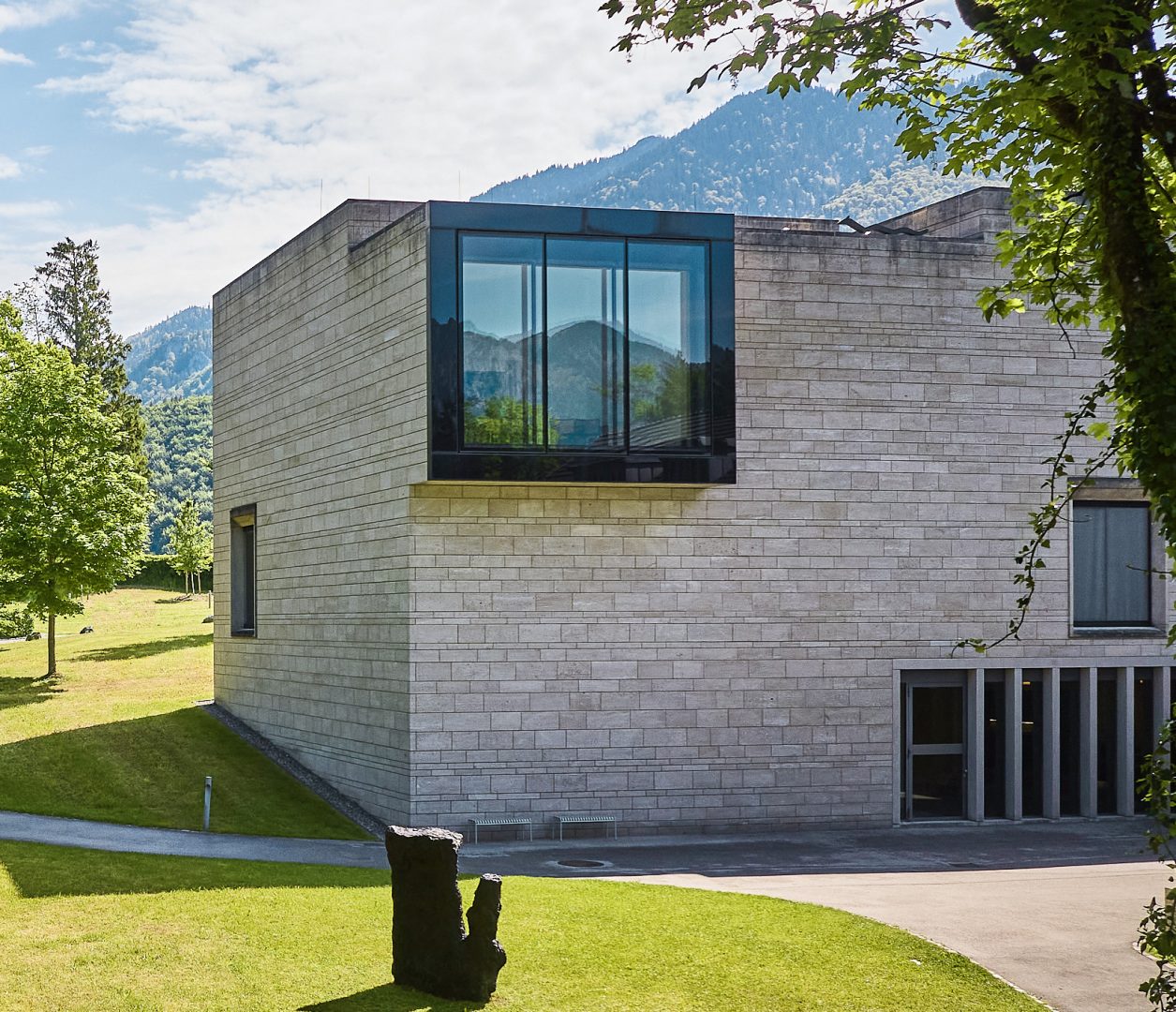
The Franz Marc Museum, whose research focus and collection are closely linked to the Munich avant-garde, presents around 40 paintings in this exhibition. Loans come from, among others, the Hamburger Kunsthalle, the Kunstpalast Düsseldorf, the Leopold-Hoesch-Museum Düren and the Schlossmuseum Murnau. Many of the works come from private collections and some are on public display for the first time. The exhibition is curated by Jessica Keilholz-Busch, Director of the Franz Marc Museum.
Artworks
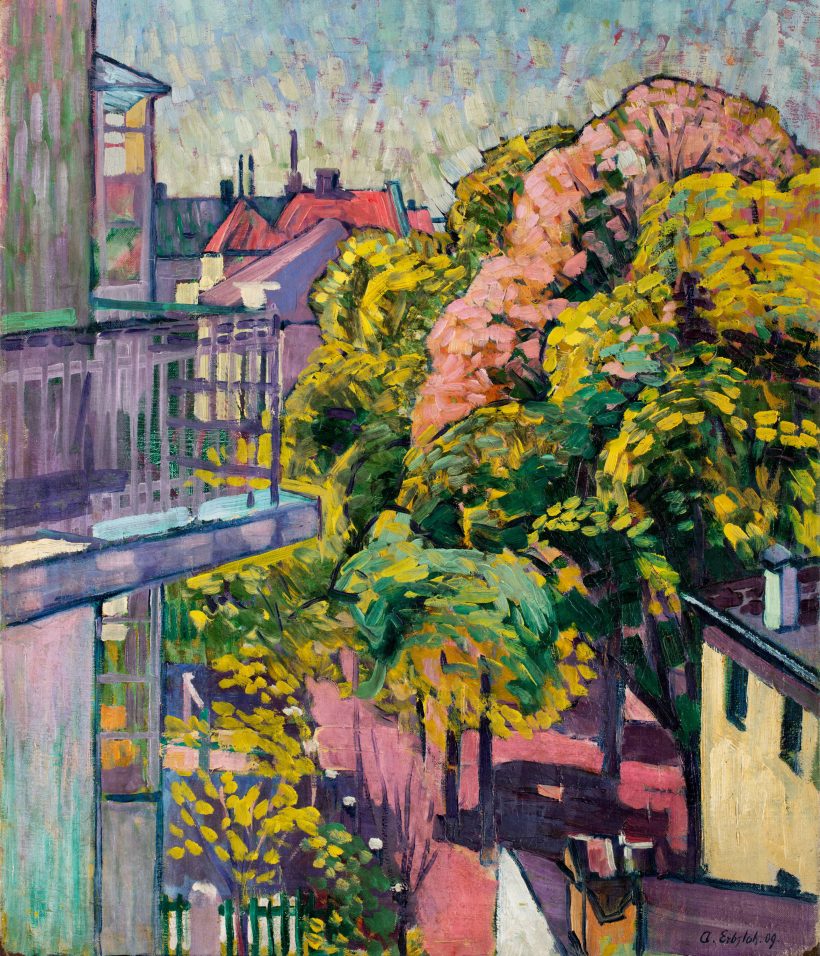
Adolf Erbslöh, Spring (View from the Studio), 1909, Hamburger Kunsthalle, on permanent loan from a private collection, © bpk / Christoph Irrgang
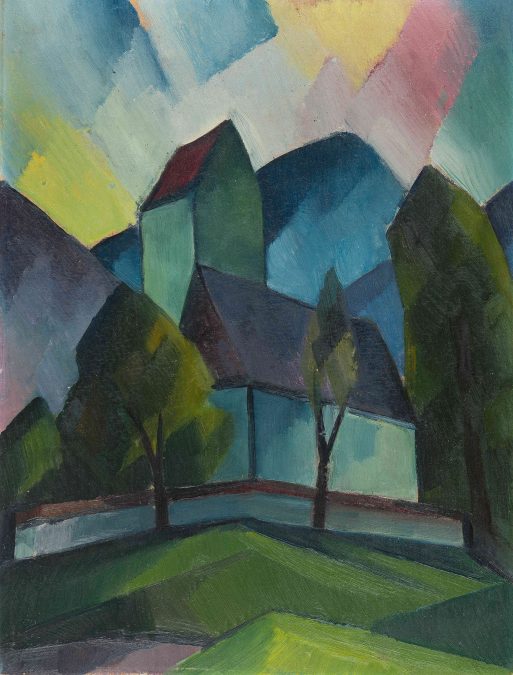
Adolf Erbslöh, Brannenburg Landscape (St. Margarethen), 1923, Private collection
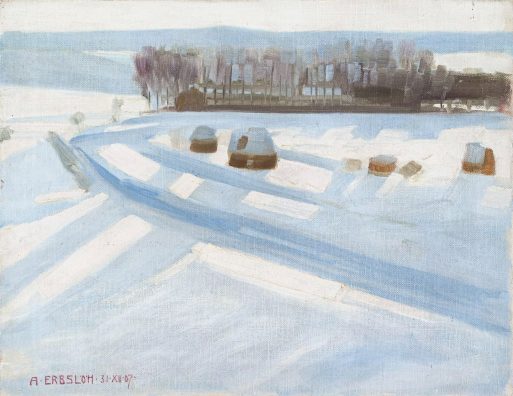
Adolf Erbslöh, Snow Landscape (Gut-Calenberg), 1907, Private collection
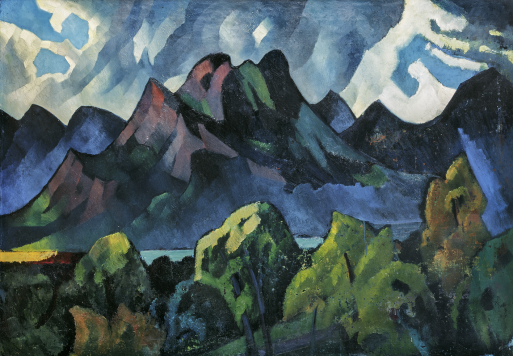
Adolf Erbslöh, Mountains, Brannenburg, 1911, Private collection, photo: Karen Bartsch
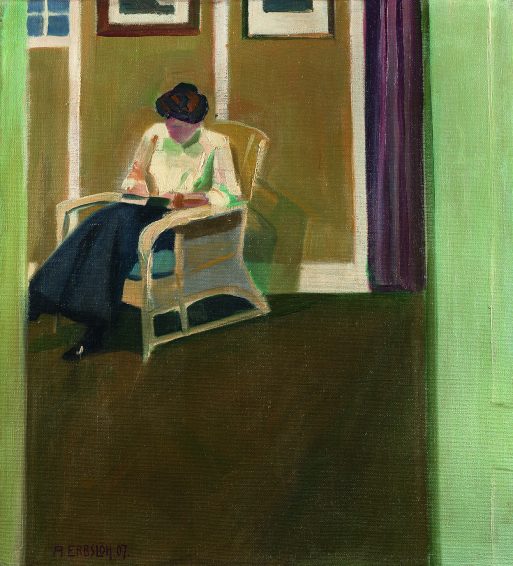
Adolf Erbslöh, Interior (Adeline in the Hall), 1907, Private collection
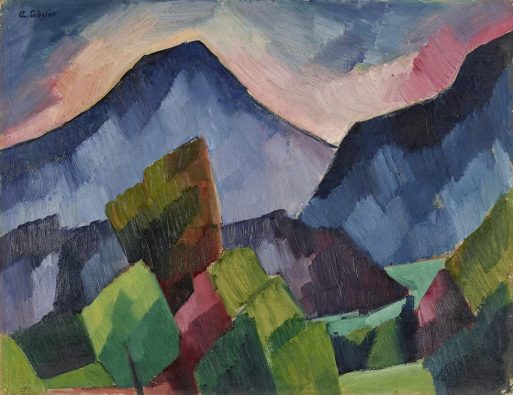
Adolf Erbslöh, Sunrise (Brannenburg), 1920, Franz Marc Museum, on loan from a private collection
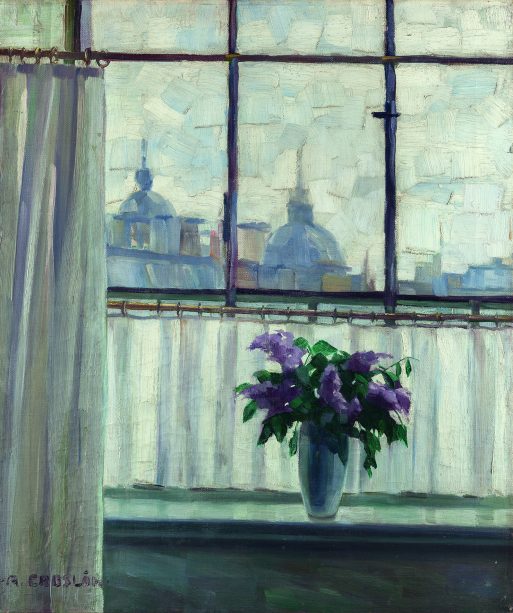
Adolf Erbslöh, Studio Window, 1908, Private collection, photo: Karl & Faber Kunstauktionen
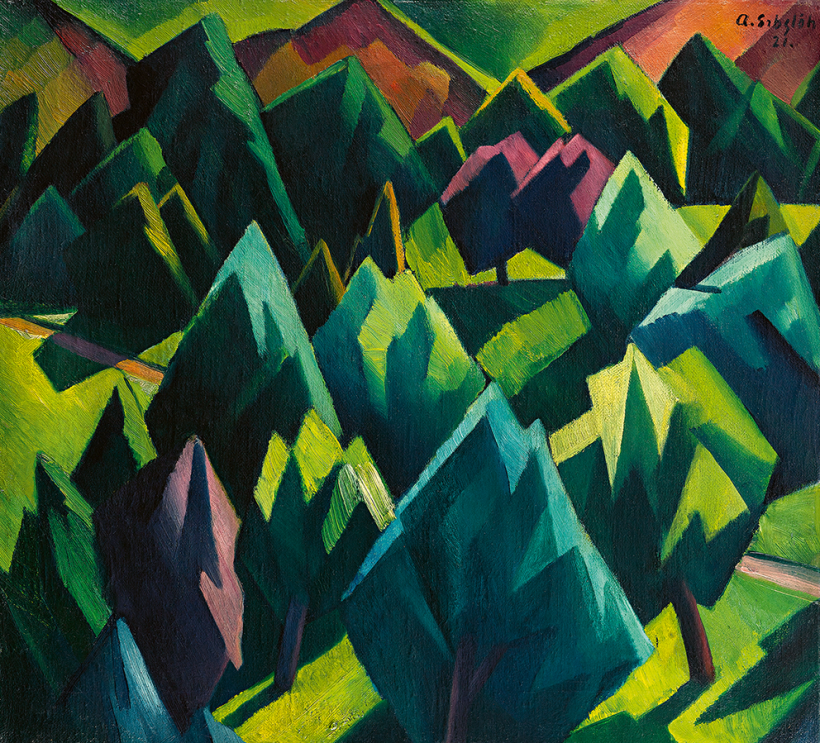
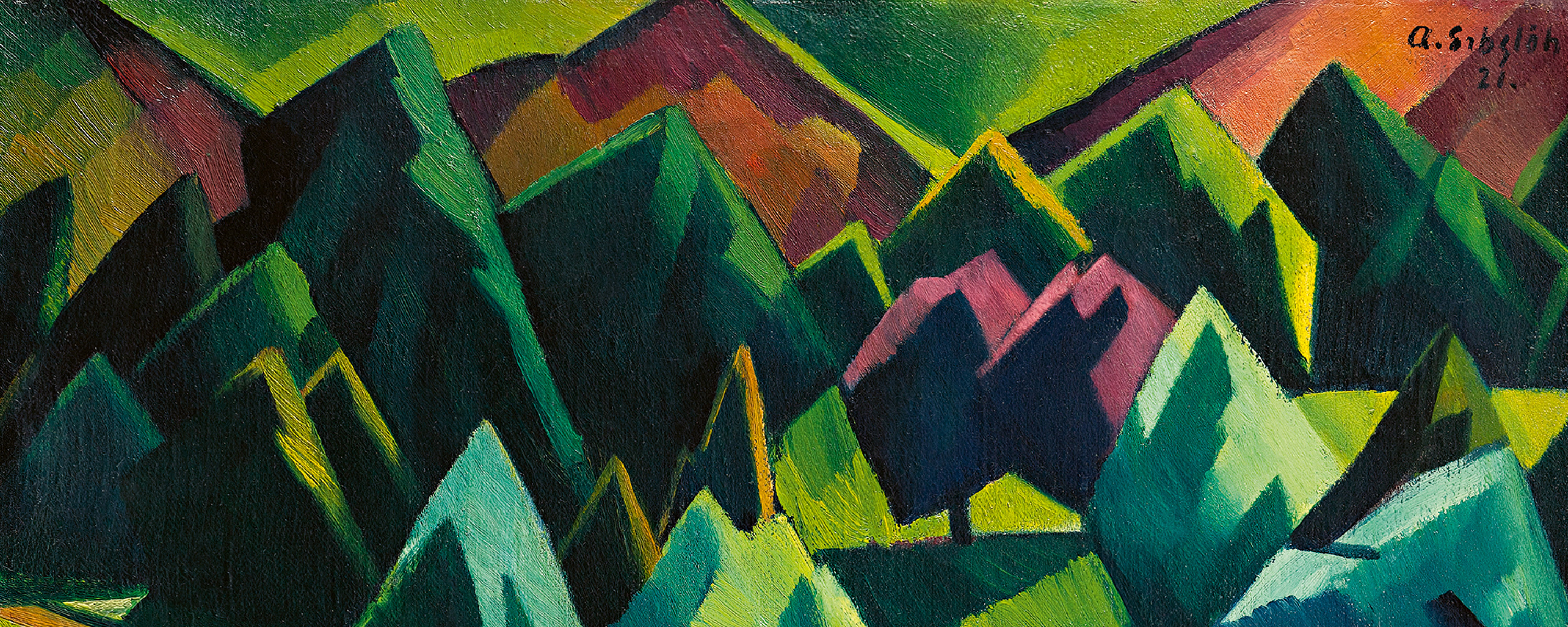
Adolf Erbslöh, Park (The Dancing Trees), 1921, photo: Karl & Faber Kunstauktionen
Interactive Room
Imagination becomes form
Adolf Erbslöh understood art as a way of giving outward form to the inner world of imagination. In this spirit, you are invited to let your imagination run free in this space and, through playful experimentation with light, colour, contrast and transparency, discover your own form of expression.
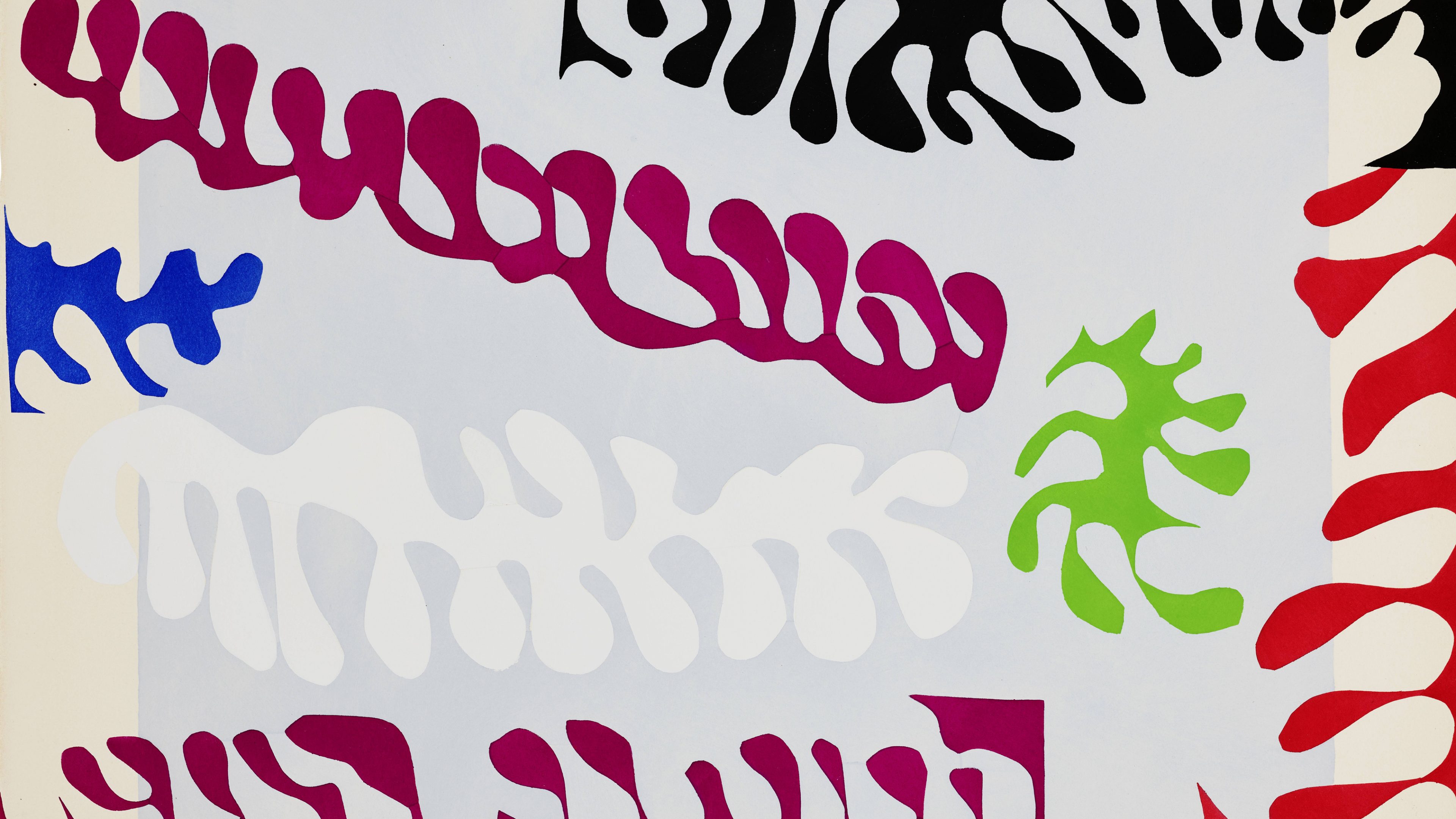
Gallery exhibition
Henri Matisse. Jazz
Henri Matisse’s artist’s book Jazz is one of the iconic visual sequences of the modern era, yet it is surprisingly rare to see an original copy. The Franz Marc Museum is exhibiting a copy signed by Matisse, comprising 20 vibrantly coloured plates in which the circus, travel, fairy tales and mythology are rendered in radically simplified forms. For this work, Matisse did not use drawing in the classical sense, but rather paper cut-outs: He painted paper in bright colours, cut out shapes from it and assembled them into compositions, which were then printed using the pochoir technique. He called this process ‘drawing with scissors’, a method that reimagines the illustrated book: not text plus image, but a sequence of images with its own rhythm and logic.
The title Jazz evokes associations with music, movement and joie de vivre, and indeed the panels, with their vibrant colours, sweeping lines and repetitions, appear like visual improvisations. At the same time, the book was created under extremely trying circumstances: during the German occupation, amidst war-induced separation and danger for Matisse’s family, and following a major operation that severely limited his physical abilities. Many motifs are therefore doubly coded: figures such as Icarus, the clown or the knife-thrower represent simultaneously the circus world, mythological themes and a reality of threat, injury and downfall. Behind the seemingly cheerful surface lies an underlying tone of danger, loss and the proximity of death.
For the viewer, this means that Jazz cannot be read either as a mere ‘festival of colour’ or as a hidden war report, but rather as a pictorial space in which contradictions are simultaneously present. Matisse responds to war, illness and fear not with documentary scenes, but with highly artificial, vividly coloured images that intertwine memory, pain and joy. The title refers less to a specific musical event than to a working principle: rhythmic variation, improvisation, the productive coexistence of dissonance and harmony – in colour, form and motif.
Artworks
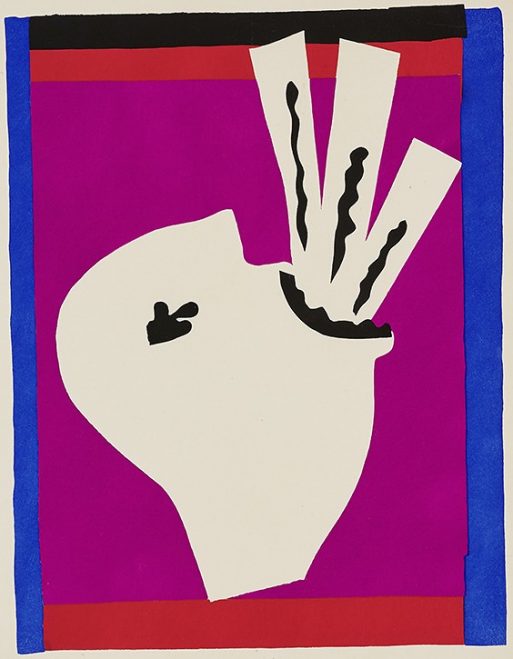
Henri Matisse, The Sword Swallower, Sheet XIII from the Jazz portfolio, 1943/1944, printed in 1947
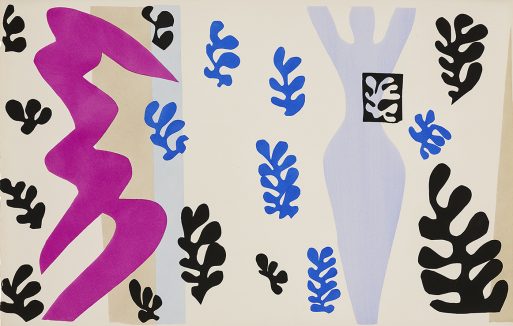
Henri Matisse, The Knife Thrower, Sheet XV from the Jazz portfolio, 1943/1944, printed in 1947
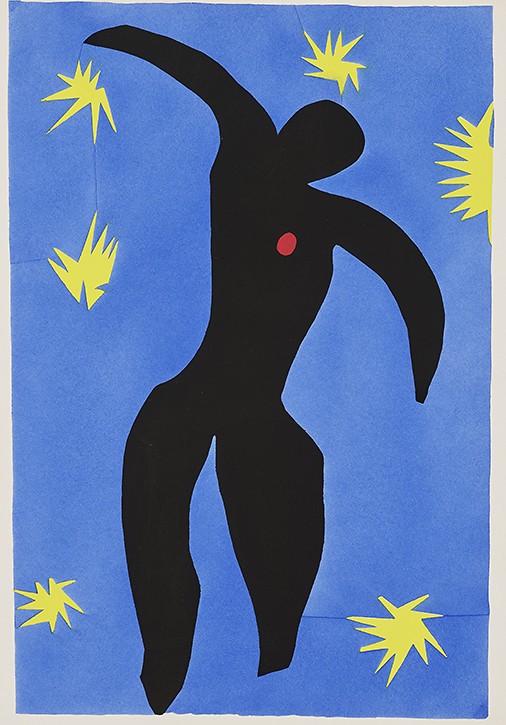
Henri Matisse, Icarus, Sheet VIII from the Jazz portfolio, 1943/1944, printed in 1947
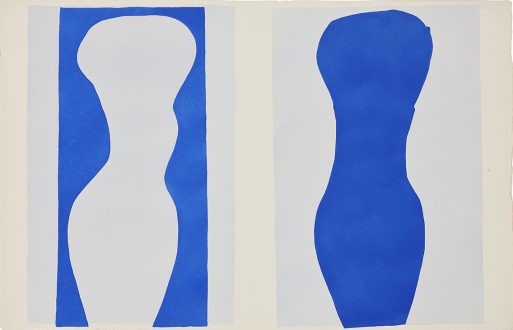
Henri Matisse, Forms, Sheet IX from the Jazz portfolio, 1943/1944, printed in 1947
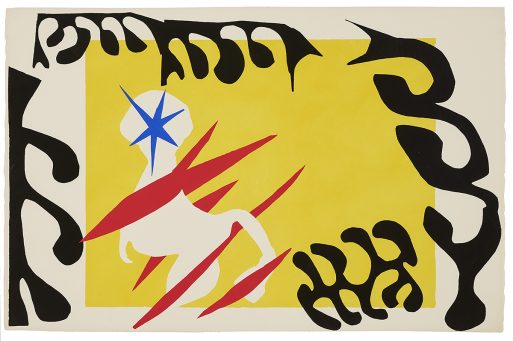
Henri Matisse, The Nightmare of the White Elephant, Sheet IV from the Jazz portfolio, 1943/1944, printed in 1947