

Where Art
Meets Nature
Our Philosophy
A dialogue between art, nature and society
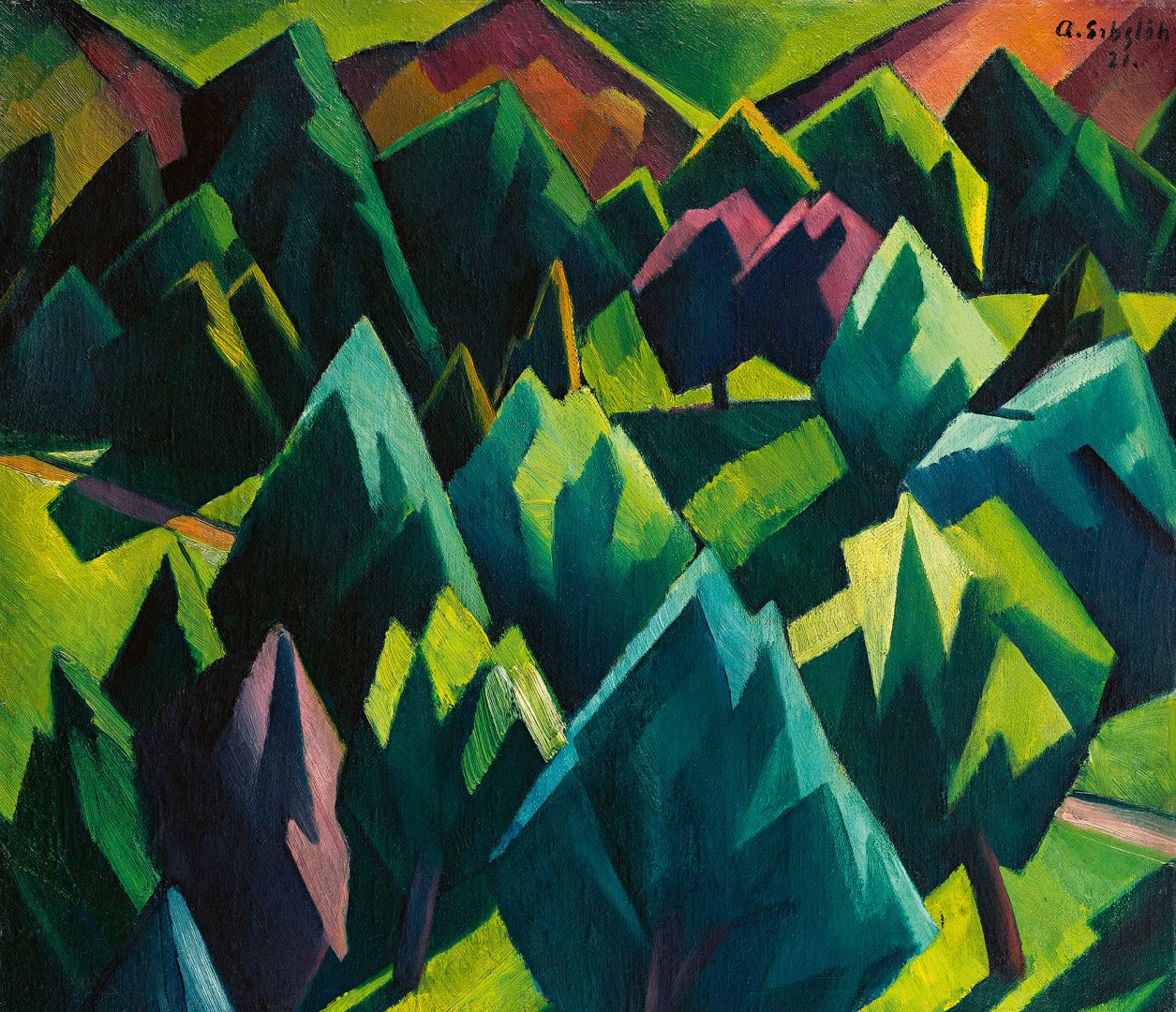
The Franz Marc Museum views its role as a place where art, nature and social issues engage in eloquent, meaningful dialogue. Starting with its peerless location at Lake Kochel, nestled in the Alpine foothills, which inspired so many of the »Blue Rider« artists, the museum is a space for fostering perception, contemplation and connection.
The collection’s displays and exhibitions draw on the idea of dialogue between art and nature, and expand it by introducing relevant perspectives for our times: ecological responsibility, cultural participation and social justice are core tenets of our activities as curators. In accordance with ICOM’s new museum definition, the Franz Marc Museum views its role as an inclusive, participation-based museum that is open to many different voices and perspectives, particularly those that had previously long been overlooked.
The oeuvre of Franz Marc takes front and centre stage. His artistic philosophy radically embraced the future – in his approach to nature and to the intellectual trends of his time, and in engaging with international avant-gardists. The museum places Marc’s work in its 20th-century context and casts new light on it from new, often unexpected viewpoints. In doing so, it also brings visibility to the work and contributions of women artists, who had previously been consigned to the periphery of the canon.
Accessible to all
At Franz Marc Museum, universal accessibility – in terms of architecture, language and content – is no mere add-on, but a clear and obvious goal. We work constantly to remove barriers for people with disabilities, and equally for people from varied social, language or cultural backgrounds. In our quest to support participation, we engage in communication that fosters encounter, involvement and self-empowerment.
Museum with private funding
The Franz Marc Museum is funded by the Etta and Otto Stangl Foundation and the Franz Marc Foundation. It receives no government or municipal funding. The collection and architecture that make up the museum have been achieved by the outstanding dedication of individuals, chiefly the Ibach, Stangl, Mittelsten Scheid and Winterstein families. Their dedication provides the means for an independent museum, conscious of its origins and aware of its responsibility for the future in cultural, social and ecological terms.

History
The history of the Franz Marc Museum is closely bound up with the personal commitment shown by numerous collectors, and with a very special artistic friendship. That friendship began from the art collection of the Wuppertal industrialist Rudolf Ibach, who had already begun to collect Expressionist works in the early decades of the twentieth century, including paintings and drawings from members of »Die Brücke« and the »Blue Rider« as well as works by Paul Klee.
The new museum premises opened in 2008. Since then, the Franz Marc Museum has received joint funding from the Franz Marc Foundation and the Stiftung Etta and Otto Stangl Foundation. Alongside works by Franz Marc, it displays works by other artists including Erich Heckel, Wassily Kandinsky, Ernst Ludwig Kirchner, August Macke and Gabriele Münter. The perspective is broadened further by temporary exhibitions and a constantly expanding sculpture park.
After the Second World War, art historian Klaus Lankheit introduced gallery owners Etta und Otto Stangl to Maria Franck-Marc, Franz Marc’s widow. The meeting deepened into a close friendship with the common goal of establishing a permanent home in Germany for Franz Marc’s oeuvre. In partnership with the municipality of Kochel am See, which provided a villa overlooking Lake Kochel, the Franz Marc Museum opened in 1986. The museum initially received funding from the Franz Marc Foundation, with further funding from lenders and supporters including the heirs of Maria Marc, the Bayerische Staatsgemäldesammlungen, the Franz Marc Förderkreis and the art collector, Wilhelm Winterstein.
The choice of location was far from random. Franz Marc regularly visited Kochel and its environs for painting classes while still a budding artist. He moved to the Bavarian uplands permanently in 1908 and purchased a house in the town of Kochel in 1914. The landscape was a major influence on his choice of imagery, as well as an inspiration for many of his artistic colleagues. Kochel was where Marc created most of his major works. The geographical proximity of the museum to the artistic source was thus more than symbolic: it was the starting-point for the foundation of the museum.
After the deaths of Etta and Otto Stangl in 1990 , their art collection passed to the family. Charlotte Mittelsten Scheid (née Ibach) and Margrit Auer-Ibach argued for preserving the collection in its entirety and making it permanently accessible to the public. This sparked the idea of an extended museum, a centre that would focus on the life and work both of Franz Marc and of his colleagues and successors, and document the wide-ranging reverberations of his work throughout twentieth and twenty-first century art.
Today the Franz Marc Museum views its role as a place where Franz Marc’s art can be experienced within the context of its era and beyond, in a dialogue with the history of modernism and with the issues facing society today.
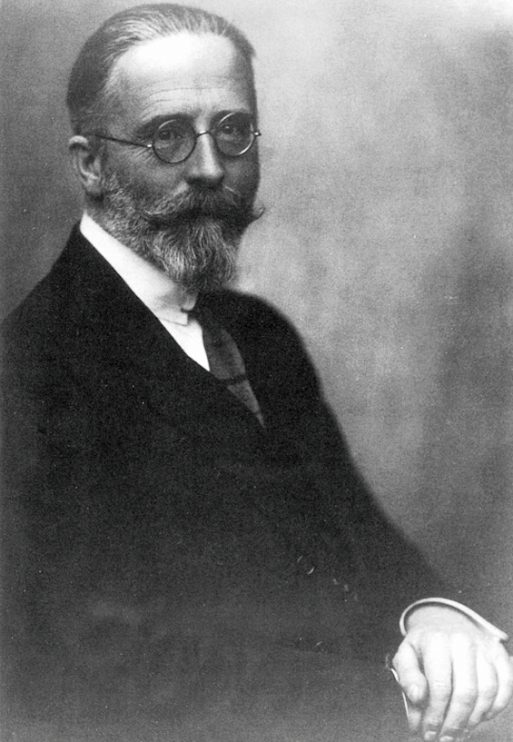
Rudolf Ibach, c. 1925
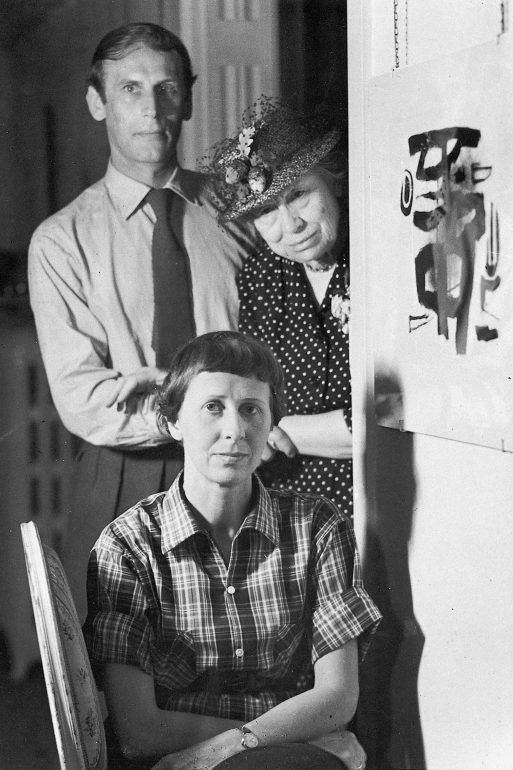
Etta and Otto Stangl with Maria Marc, c. 1950, Photo: Rosemarie Nohr
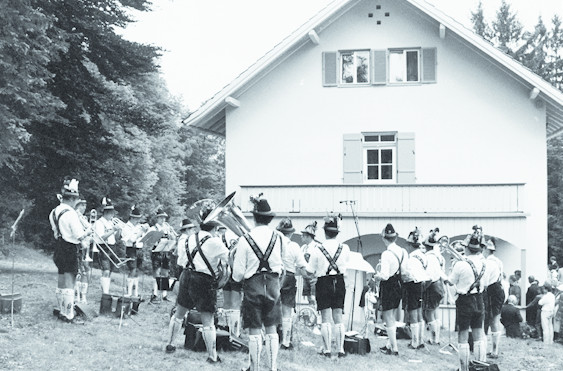
Opening of the Franz Marc Museum, 1986
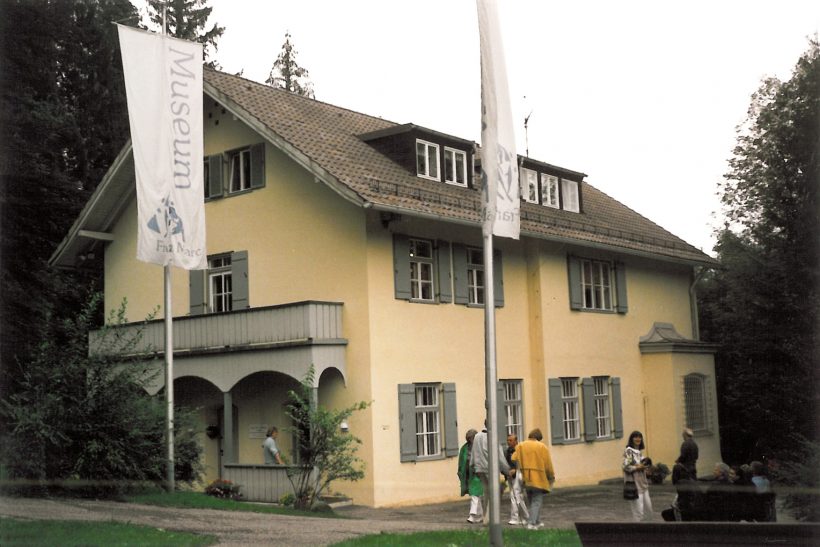
The former Franz Marc Museum
Architecture
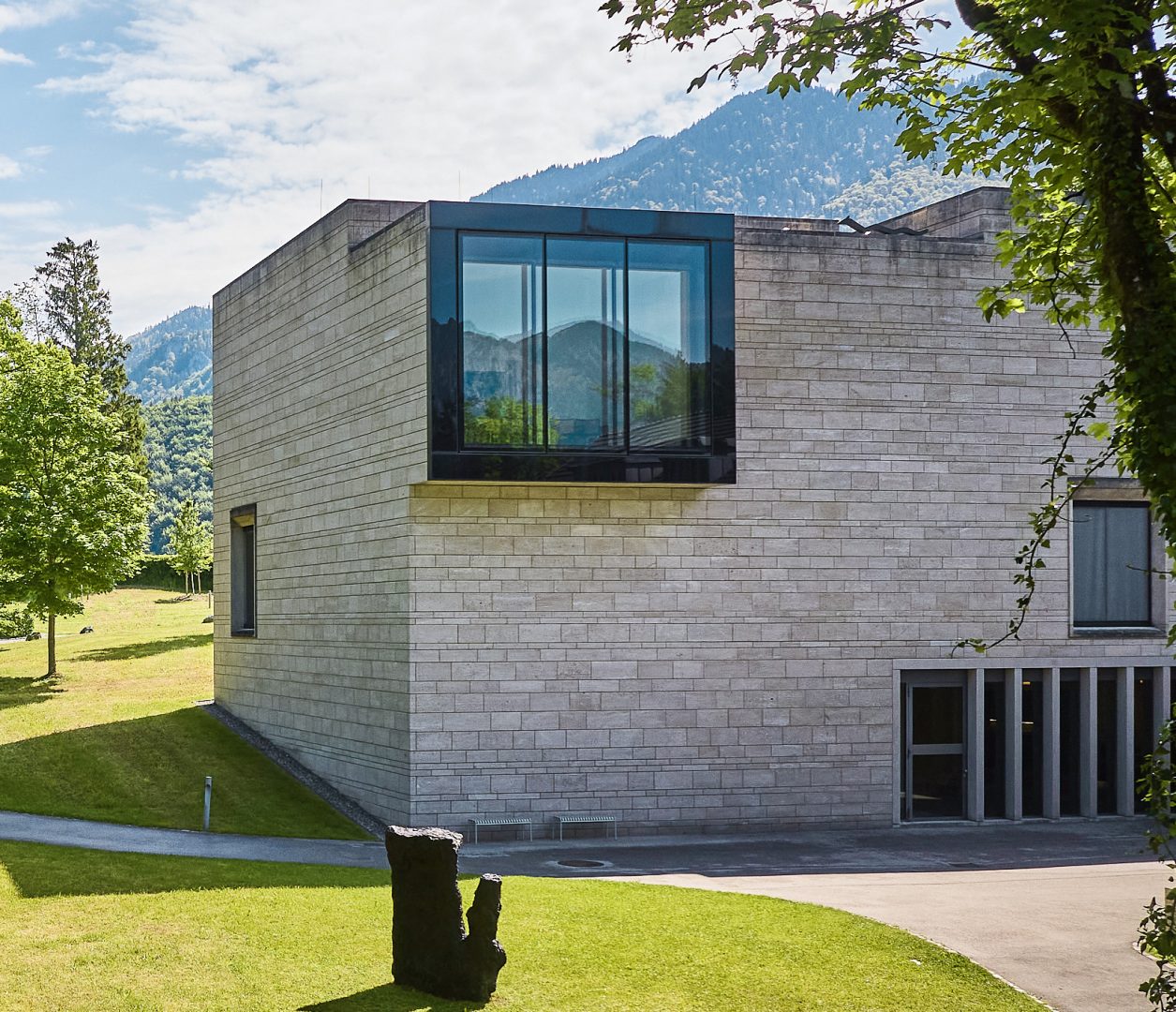
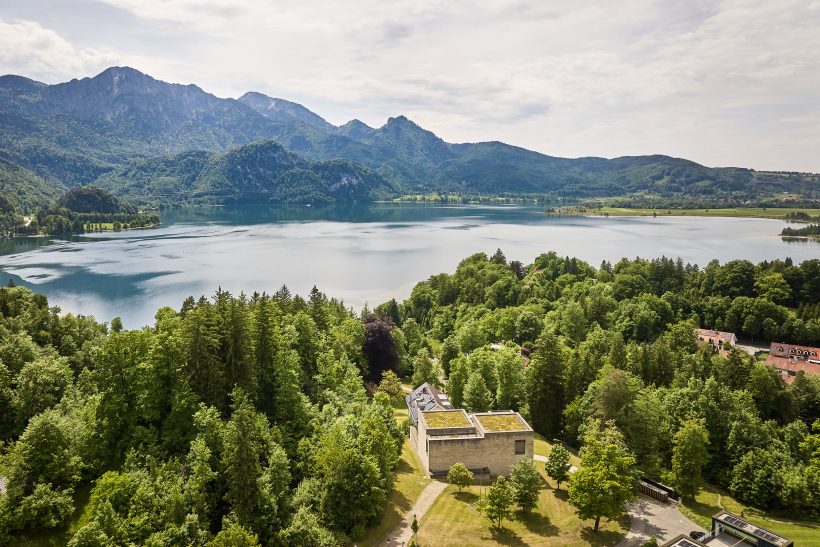
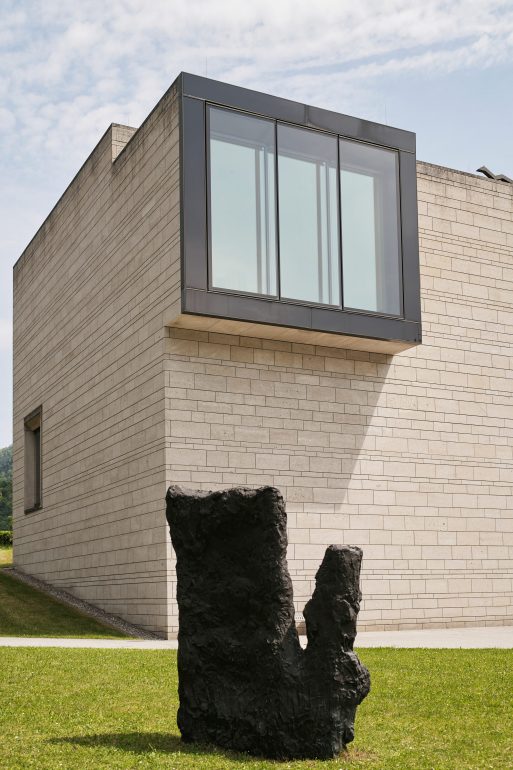
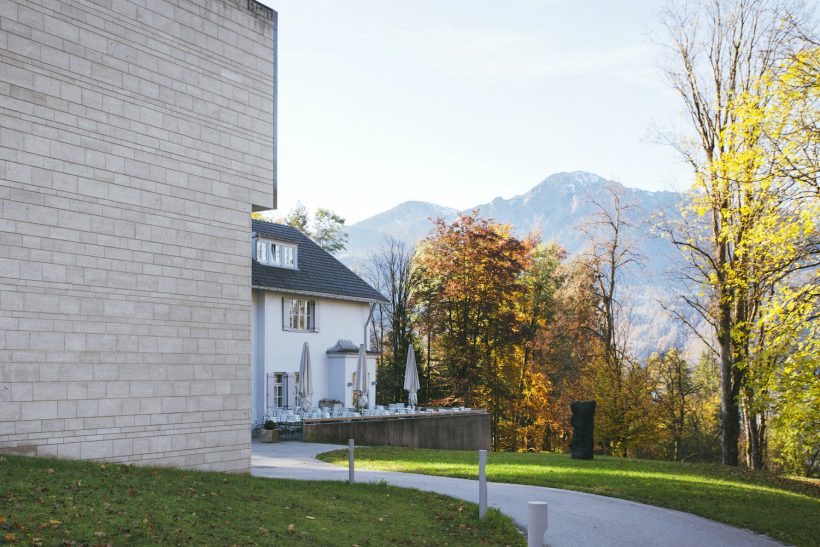
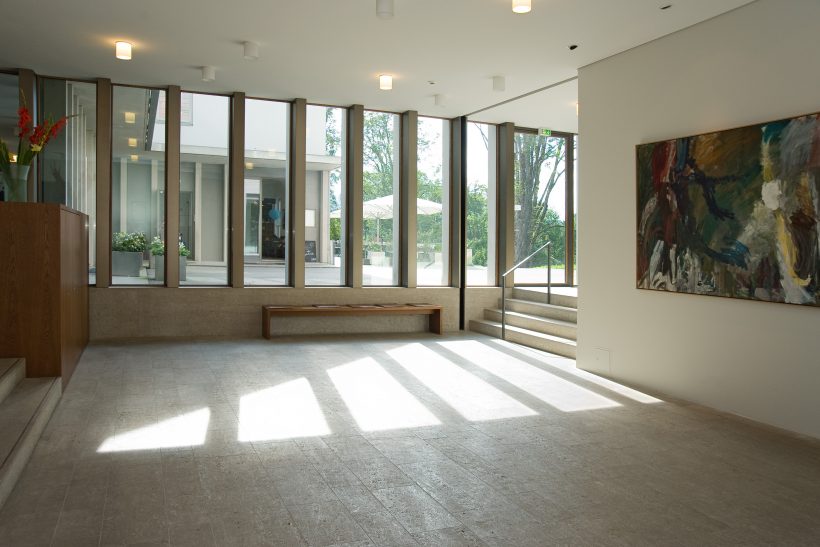
The Franz Marc Museum soars above Lake Kochel, with panoramic views over the water against the stunning backdrop of the Bavarian Alps. The location not only shapes the atmosphere of the museum, but is an integral element of its architecture. Built in 2008 to a design by Zurich-based architects’ office Diethelm & Spillmann, the new wing of the museum embodies the idea of an open dialogue between art and nature; Large windows draw the gaze to the outside world, linking the landscape to the imagery in the artworks as a constant reminder of the deep connections between the »Blue Rider« artists and their environment.
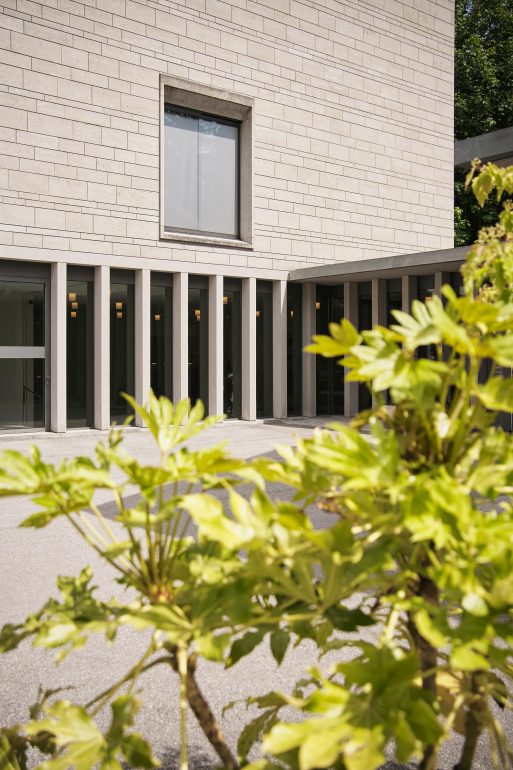
A courtyard links the new museum to the historical villa that has housed the original Franz Marc Museum since 1986. Today it is home to the café, offices and event spaces. Visitors walking to the museum pass through a sculpture park of works by Horst Antes, Tony Cragg, Norbert Kricke, Per Kirkeby, Alf Lechner, Renée Sintenis and Hans Stangl.
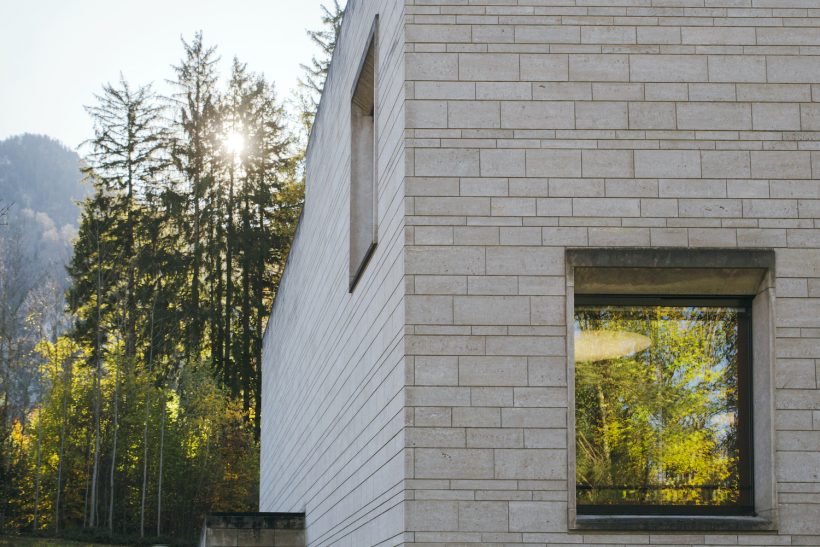
Both the interior and exterior feature an interplay of contrasts; the light shell limestone of the façade radiates calm tranquillity and closeness to nature, while the clean lines of the building express an austere calm. Inside, warm wood creates an atmosphere of intimacy. The varied dimensions of the rooms, from spacious halls to small-scale cabinets, offer ideal conditions for displaying paintings, drawings and sculptures.
The end of the tour is marked by a stunning architectural highlight: a large ground-floor window affords views over Lake Kochel and the impressive Kochel Mountains. An ever-changing natural world, shifting with the light and the seasons and capturing the connection between landscape and art in a poignant sensory experience.
The museum café and spacious terrace offer visitors an ideal opportunity to absorb their impressions over lunch or coffee, looking out over the landscape that Franz Marc once found so deeply moving.
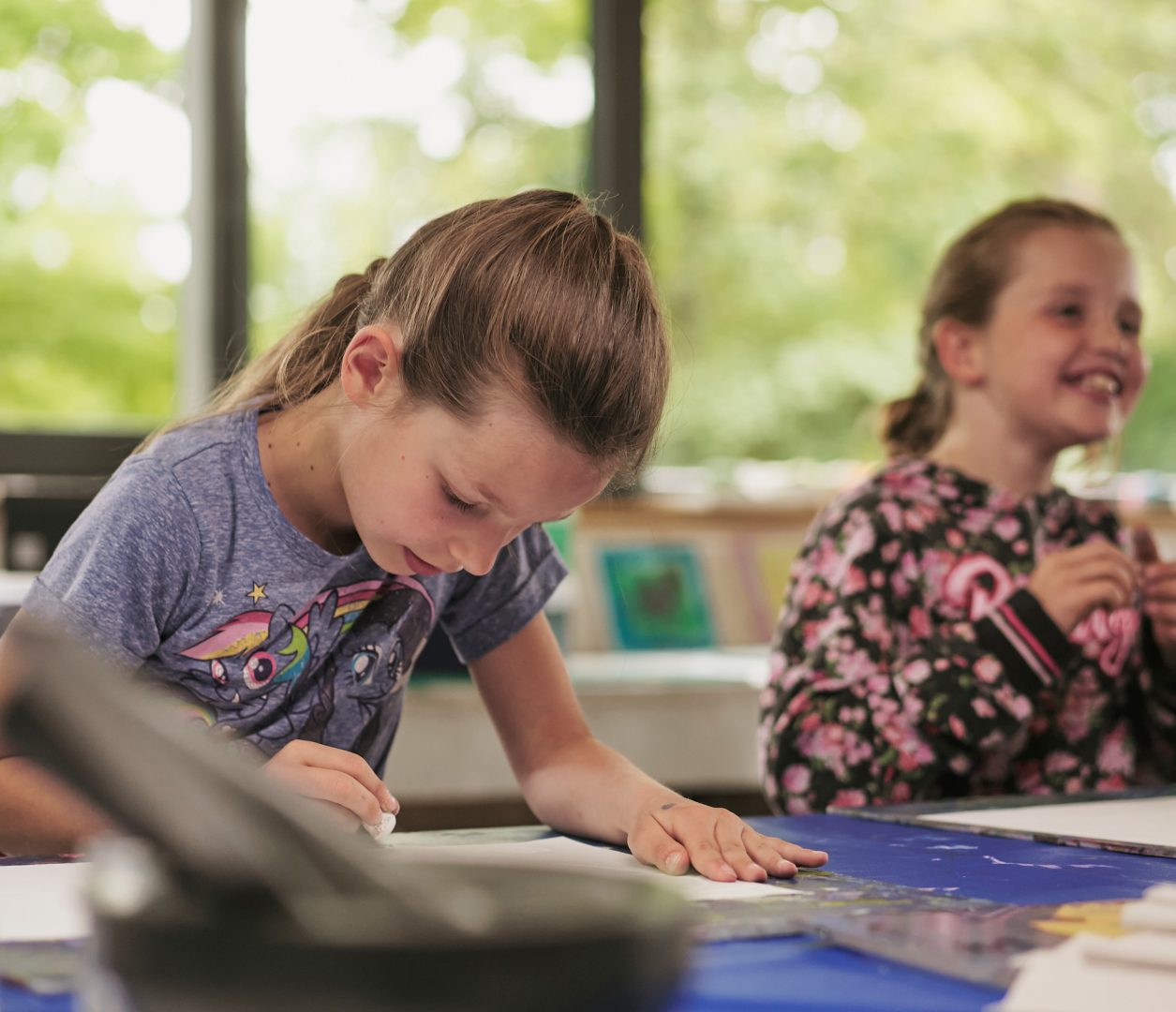
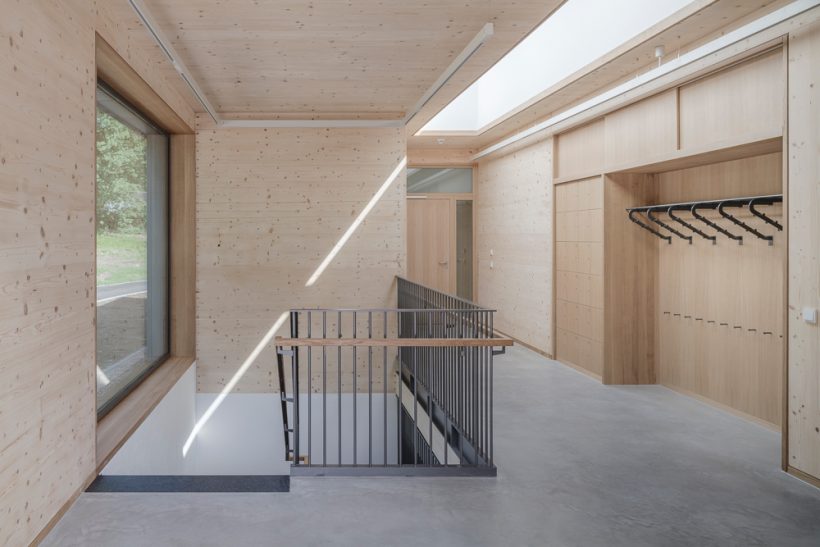
The new BlauRaum studio, completed in 2023, forges a clear path in terms of both its architecture and its purpose. Designed by Munich-based Wolfgang Kortüm Architects, the clean, bright building with multi-functional space, terrace and dedicated storeroom enhances the museum with a separate space for art education, engagement and encounter. Lofty windows open up the space to the natural world outside. The programme of events and activities in the BlauRaum is designed for children, young people, school classes, families and multigenerational groups. It has the aim of presenting a creative sensory approach to the collection and encouraging participation by different social groups. A space that serves as a hub for thinking, creating and learning together.


Franz Marc
(1880–1916)
Franz Marc was born in 1880 in Munich, the son of landscape painter Wilhelm Marc. He studied in the city at the Academy of Fine Arts under Gabriel von Hackl and Wilhelm von Diez. After travelling to France in 1903, he decided not to return to the academy, but to pursue his artistic development independently. Drawn to leave the metropolis by the tranquillity of the Bavarian countryside, he first resided at the Staffelalm mountain hut and then moved to Lenggries before finally ending up in Sindelsdorf, where he discovered the central theme of his life: the animal world as a symbol of a pure, spiritual world, untouched by the weight of civilisation.
Franz Marc is often described as a romantic animal painter striving to reach paradisical innocence and inner purity in his works. From this perspective, the animal is foregrounded as a symbol of his search for the »purely spiritual«. But Marc’s theoretical writings and later works also display an intense examination of the modern natural sciences and technological developments of his age.
In December 1909, Franz Marc paid several visits to the first exhibition by the »Neue Künstlervereinigung München« (N.K.V.M.) in Heinrich Thannhauser’s gallery.A 1910 encounter with August Macke developed into a close, warm friendship. Shortly after meeting Wassily Kandinsky and Gabriele Münter on New Year’s Day 1911, Marc joined the N.K.V.M. However, by the end of the year Kandinsky, Münter and Marc had left the artists’ group after a dispute. They opened the first exhibition by the »Blue Rider«’s editorial board on 18 December 1911.
As the co-founder of the »Blue Rider« and sole Munich resident in the group, Marc was in favour of an open, international artistic scene. He worked with Kandinsky, Macke and Münter to initiate exhibitions bringing together artists from different countries, cultures and genres.
In 1912 Marc encountered Robert Delaunay’s Orphism movement, and immediately adopted its glowing colours and dynamic rhythms in his own work. He was also influenced by Futurism, which bolstered his move towards abstract art, albeit never obscuring his connection to organic nature. Marc married his long-standing partner Maria Franck in June 1913. In September of the same year he assisted with the organisation of Herwarth Walden’s First German Autumn Salon in Berlin, where around 90 national and international artists presented their works.
In 1914 Marc was drafted into the German Army and assigned to the cavalry. Two years later, aged just 36, he was killed in the First World War during a reconnaissance ride near Verdun. The works he produced in a few short years are among the most important contributions to classical modernism – uncompromising, visionary and still astonishingly contemporary today.
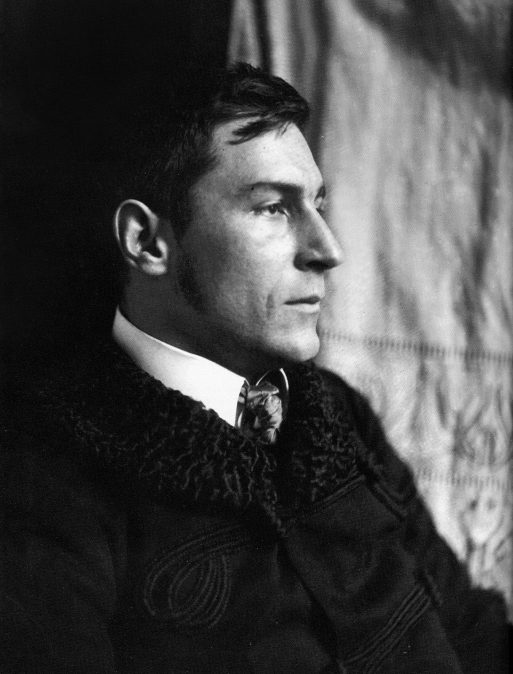
Franz Marc, 1913
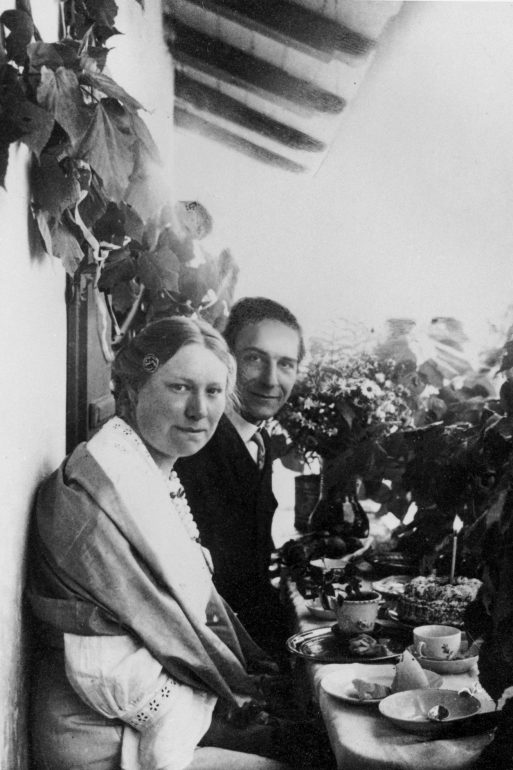
Maria Franck and Franz Marc
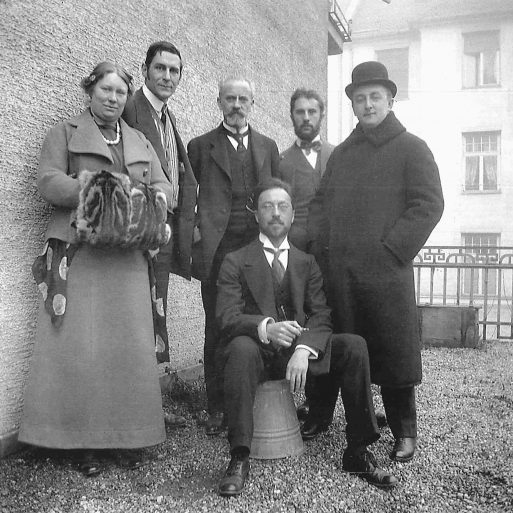
Members of the Blue Rider on the balcony of Ainmillerstrasse 36, Munich, 1911. Photographed by Gabriele Münter.
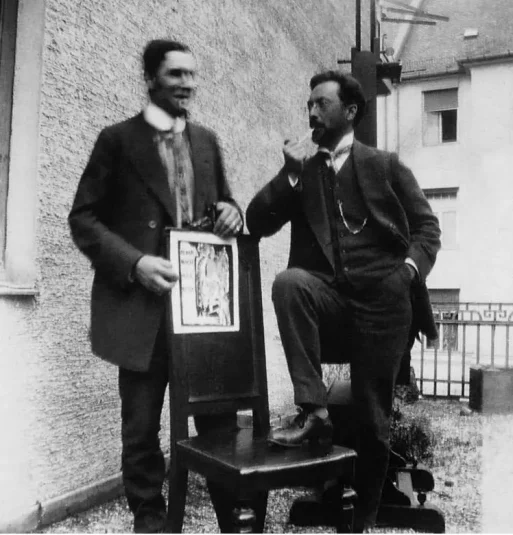
Franz Marc and Wassily Kandinsky with the woodcut frontispiece for the Almanac Der Blaue Reiter, 1912
