

June 21 –
September 27
2026
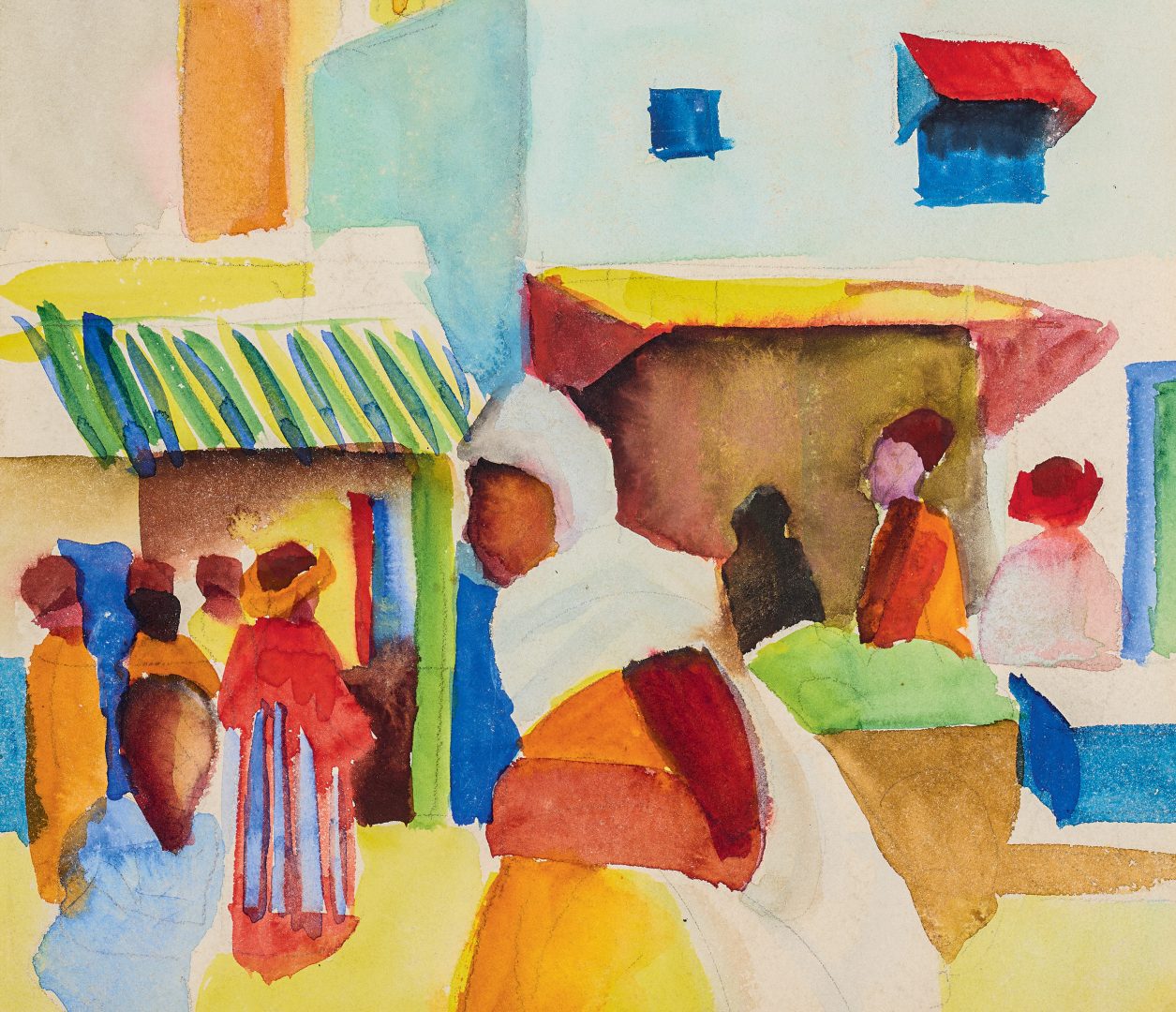
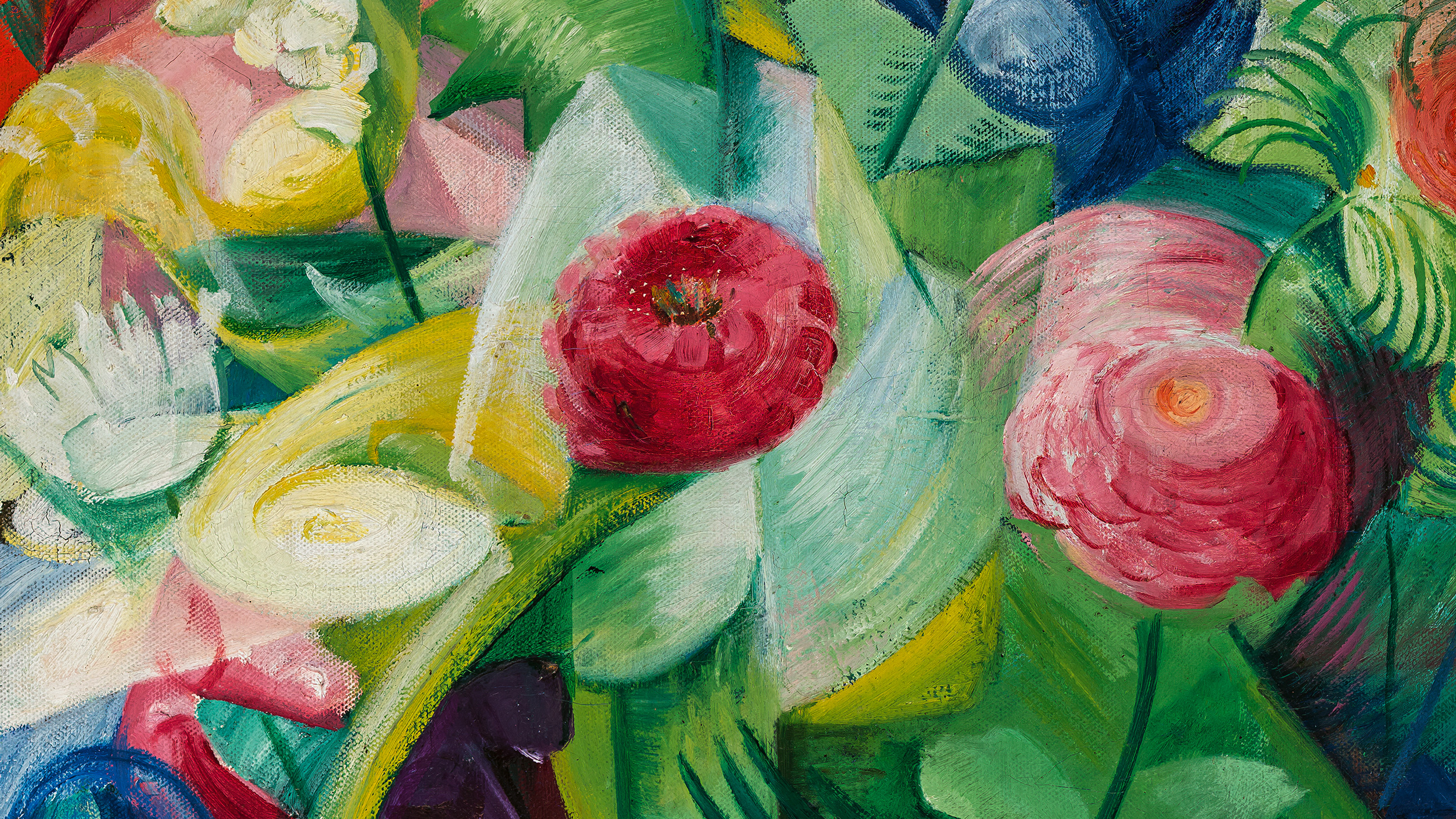
On the occasion of Maria Franck-Marc’s 150th birthday (1876–1955), the Franz Marc Museum is presenting, for the first time in the history of the museum, an exhibition devoted to her artistic work. The exhibition now turns its attention to her paintings, drawings and textile works. Flower paintings, still lifes, landscapes and children’s worlds reveal an artist who transformed familiar motifs into independent experiments with colour, surface and rhythm. What was long regarded as inconspicuous, private or secondary becomes, in her work, a field of artistic freedom.
Maria Franck-Marc wanted to become an artist long before she met Franz Marc. Already as a schoolgirl, she received lessons in music and art; later, her training led her from the Royal Art School and private women’s academies to Munich and the School of the Women Artists’ Association. Like many women of her generation, she had to find her way into art outside the state academies.
Her encounter with Franz Marc in 1905 was personally and artistically formative. At times, the two worked side by side directly from nature, exchanged ideas about painting and moved in the circle of artists from which Der Blaue Reiter would emerge. In 1912, Maria Franck-Marc was represented with three works in the second exhibition of the editorial group Der Blaue Reiter. She was therefore not merely a companion, but herself part of this artistic network.
After Franz Marc’s death in 1916, her role changed fundamentally. She increasingly set aside her own artistic work and devoted herself to preserving his oeuvre. She organised exhibitions, managed the estate and played a decisive role in shaping the reception of Franz Marc’s work. This commitment was of inestimable importance for his legacy. For the perception of Maria Franck-Marc as an artist, however, it had consequences: her own work receded into the background and remained barely visible for decades.
The exhibition thus tells not only a story of rediscovery. It also asks how visibility is created: Which motifs are considered significant? Which works are collected, shown and researched? And how does our view of modernism change when an artist becomes visible whose own work long stood behind her role as guardian of Franz Marc’s estate?
Around thirty works from private and public collections, many of which have not been seen in public for decades, now make this oeuvre accessible once again.
Artworks
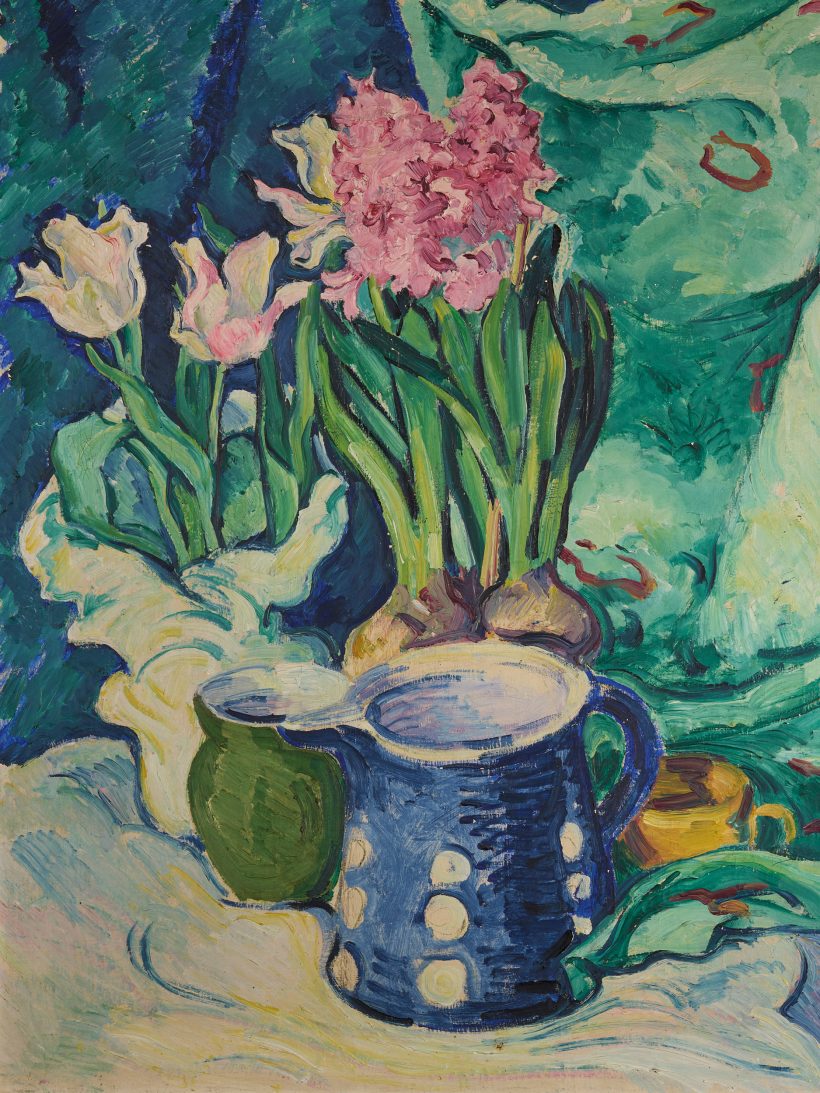
Maria Franck-Marc, Hyacinth, Tulips and Jugs, 1909/10, oil on canvas, private collection
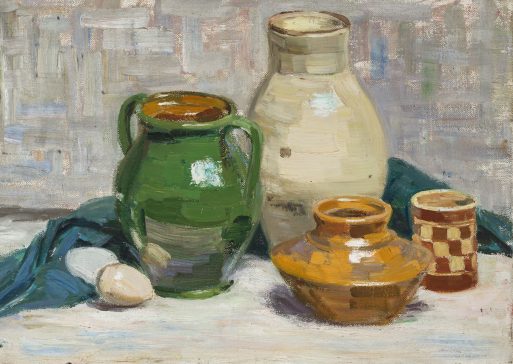
Maria Franck-Marc, Still Life with Three Jugs, c. 1907/09, oil on canvas, private collection
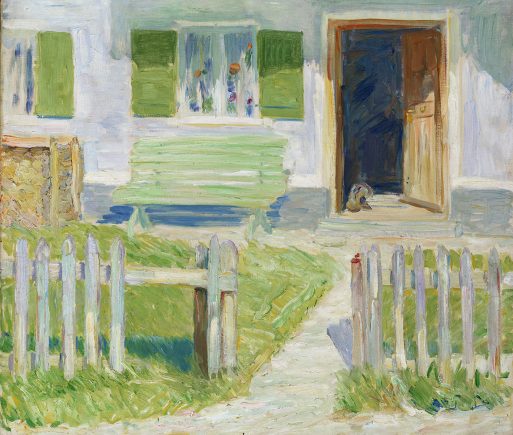
Maria Franck-Marc, House Entrance with Garden Fence, c. 1909, oil on canvas, private collection
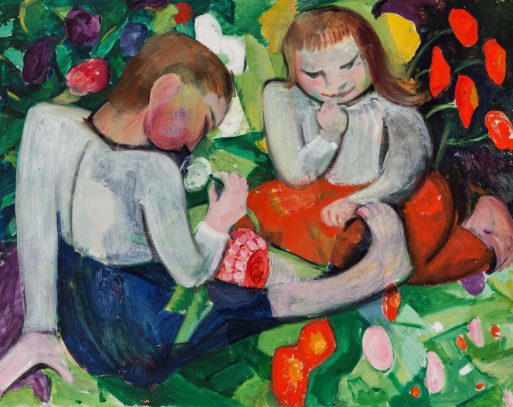
Maria Franck-Marc, Two Children among Flowers, c. 1912, oil on canvas, private collection
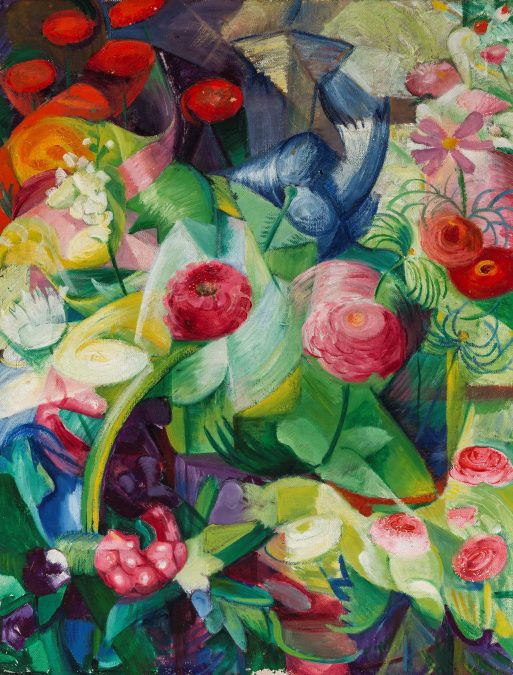
Maria Franck-Marc, Flower Piece with Dahlias, c. 1913, oil on canvas, private collection
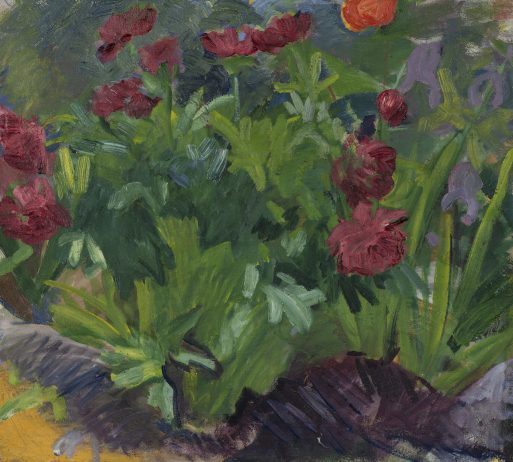
Maria Franck-Marc, Peonies, c. 1909/10, oil on canvas, Museum Wiesbaden
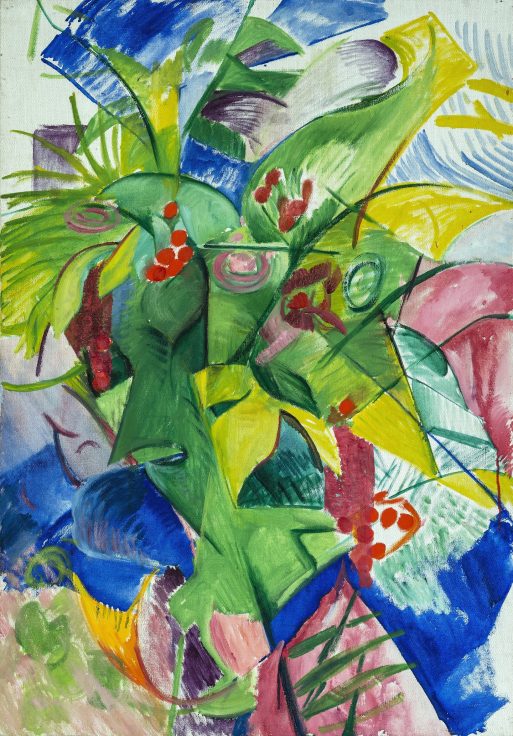
Maria Franck-Marc, Flowers and Leaves (unfinished), c. 1913, oil on canvas, Etta and Otto Stangl Foundation
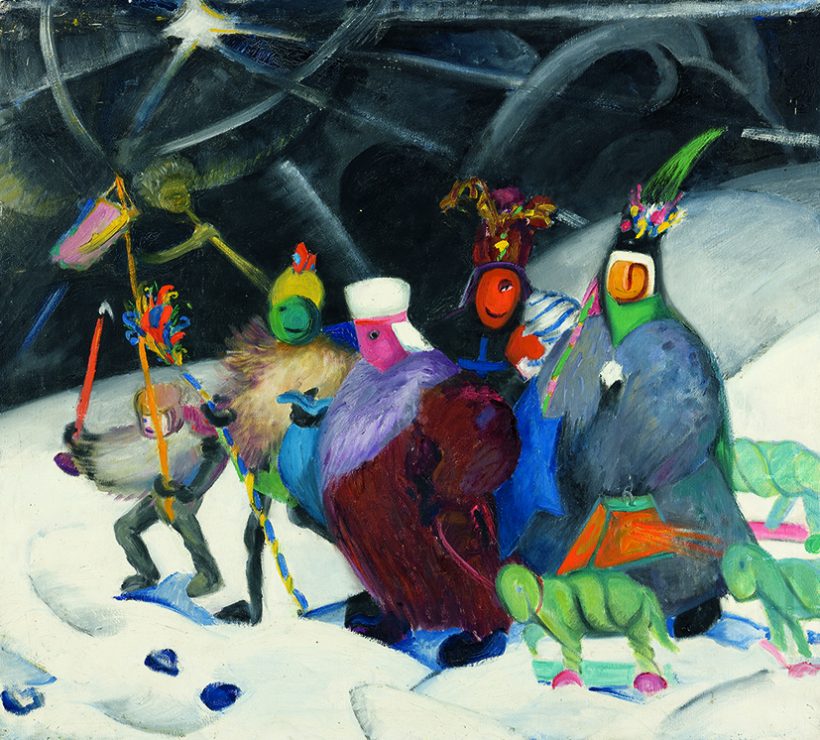
Maria Franck-Marc, Shepherds on the Way to the Manger, c. 1911, oil on canvas, Schlossmuseum Murnau, permanent loan from the PSM Privatstiftung at the Schlossmuseum Murnau, inv. PSM 47/12210
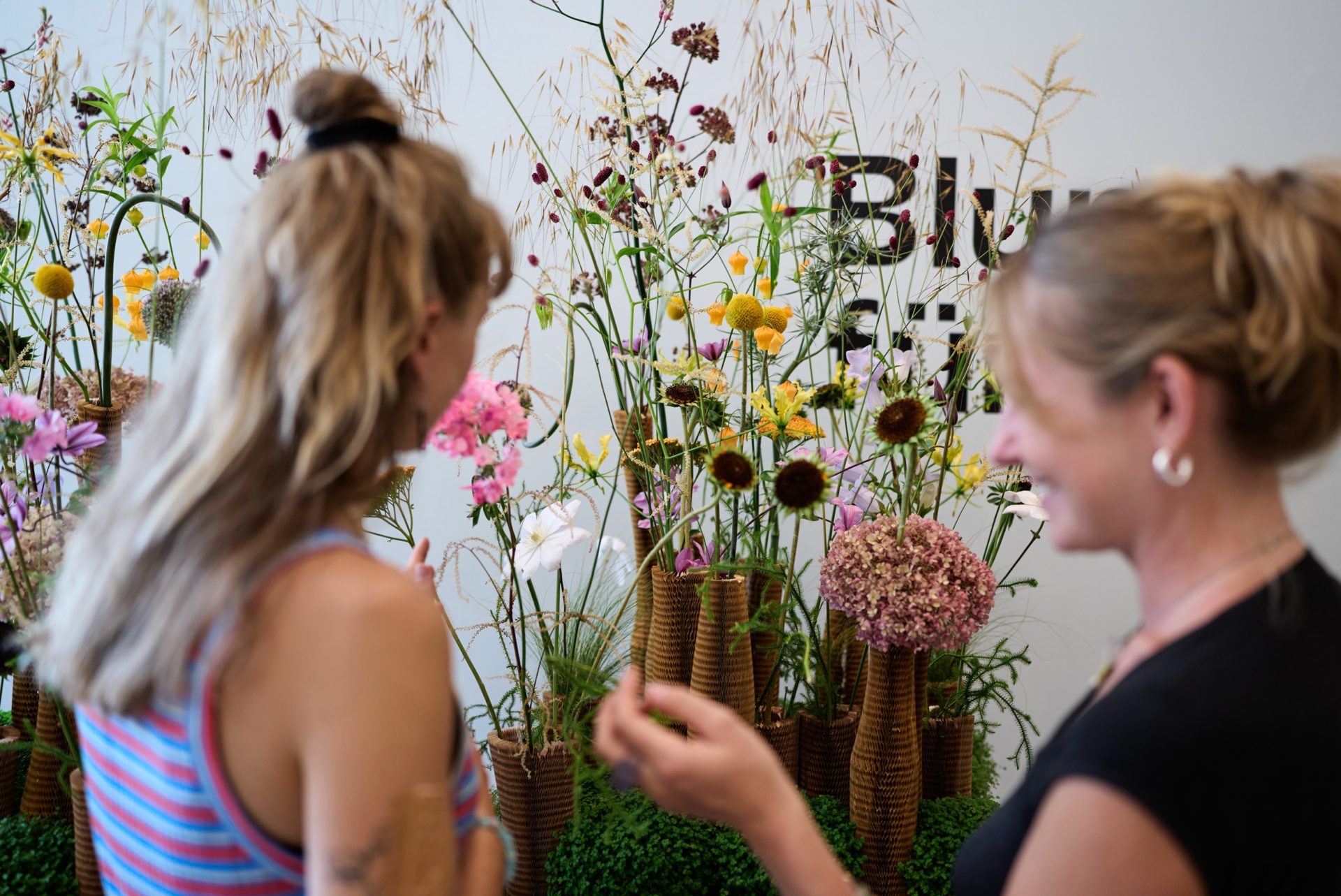
Flowers for Maria
For the exhibition on Maria Franck-Marc, Murnau-based florist Andreas Müssig has developed a floral installation in the foyer of the Franz Marc Museum entitled Flowers for Maria. Inspired by the artist’s flower paintings, the arrangement is conceived as a work that continually changes over the course of the exhibition: blossoms open, plants wither, colours shift, and new forms emerge. In this way, the installation becomes a living dialogue with Franck-Marc’s painting — and a reflection on time, transience, and perception.