11 October 2026 –
17 January 2027
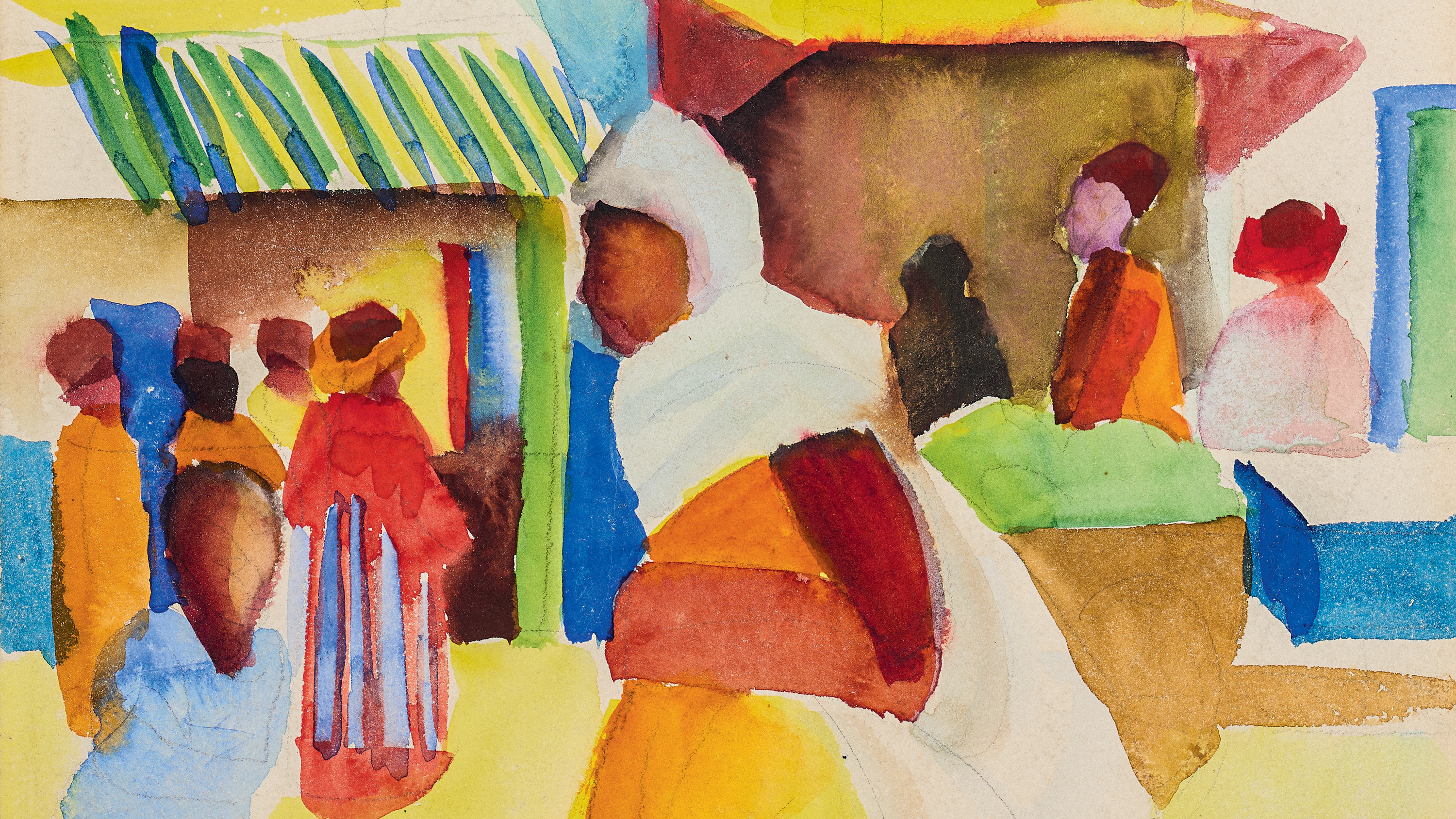
What happens when artists set out to see things in a new light, venturing into unfamiliar spaces and landscapes whose colours and forms transform their own perspective? The Franz Marc Museum explores this question and presents two journeys: the lesser-known stay of several months by Gabriele Münter and Wassily Kandinsky in Tunis and the surrounding area in 1904–05, and Paul Klee’s famous trip to Tunis, August Macke and Louis Moilliet in the spring of 1914.
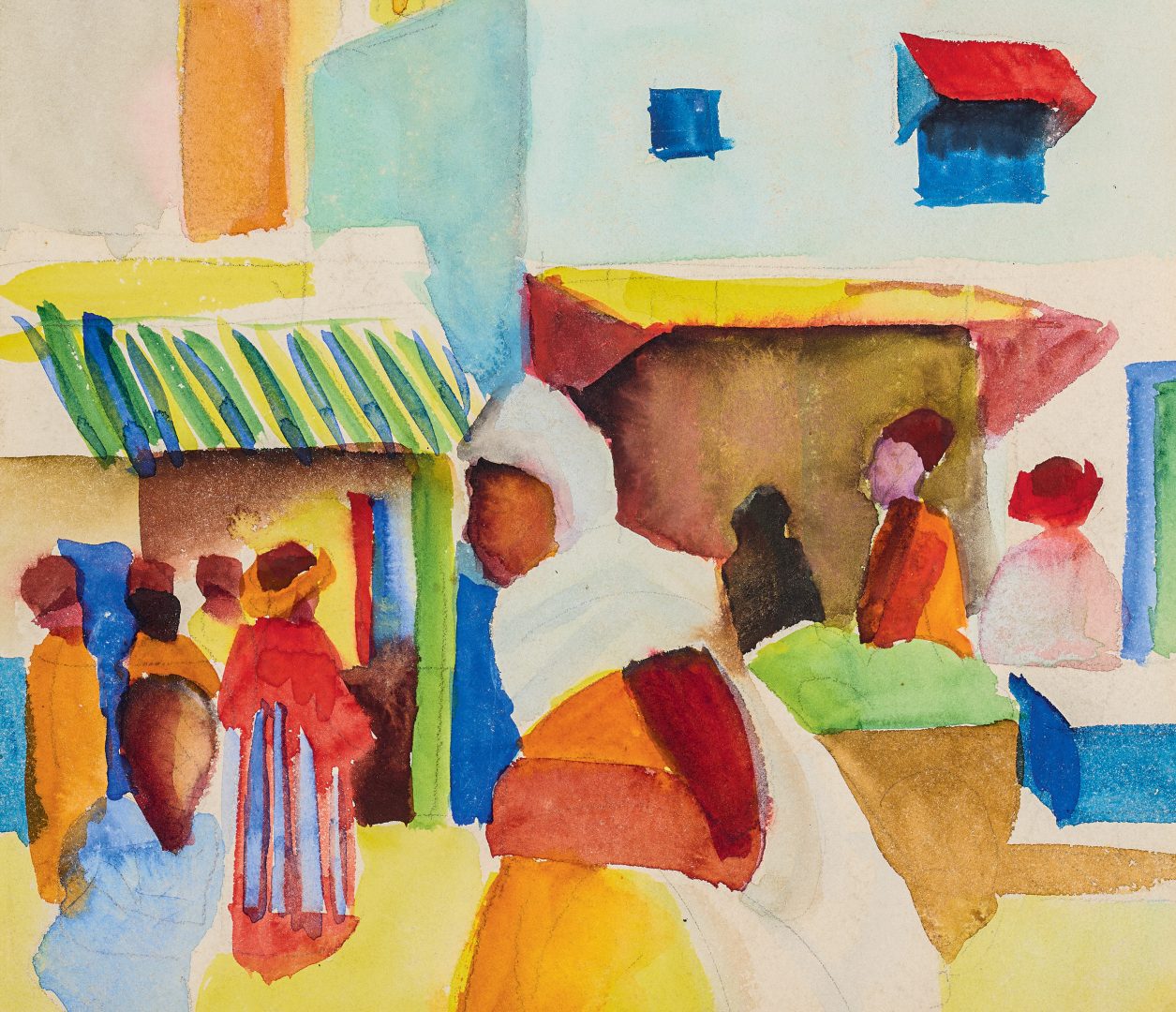
Tunisia challenged the artists’ perceptions and became a place of intense artistic experimentation. Münter captured alleyways, markets and walls in precise photographs and transformed them into paintings and works on paper with a minimalist composition. Kandinsky translated his impressions of landscapes and architecture into vibrantly coloured, rhythmically condensed compositions. In 1914, Macke created luminous watercolours in the space of a few weeks, in which street scenes, figures and urban spaces become structures of plane and colour. Klee developed symbolic pictorial structures drawn from architecture, landscape and memory. Moilliet condensed architectural and street scenes into transparent colour schemes in which observation and abstraction intertwine. Their engagement with Tunisia did not end with their return journey: motifs, colour effects and pictorial ideas reappear in later works and are further developed.
The exhibition brings together around sixty paintings, watercolours, drawings, prints and photographs. It shows how impressions from travel were transformed into images, whilst also exploring how the colonial gaze shaped these images. Tunisia had been a French protectorate since 1881. By 1900, the European view of North Africa had already been shaped by travelogues, postcards, tourist infrastructure, exhibitions and earlier depictions of the ‘Orient’. Whilst these images and colonial structures did not entirely dictate the artists’ perspective, they did help to shape what they perceived and found artistically compelling.
Light Becomes Colour is an invitation to curiosity – about luminous art, about fascinating contexts and about questions that remain relevant to this day: What do we see when we travel? And whose world are we seeing in the process?
The exhibition is supported by the Bavarian Cultural Fund.
Works
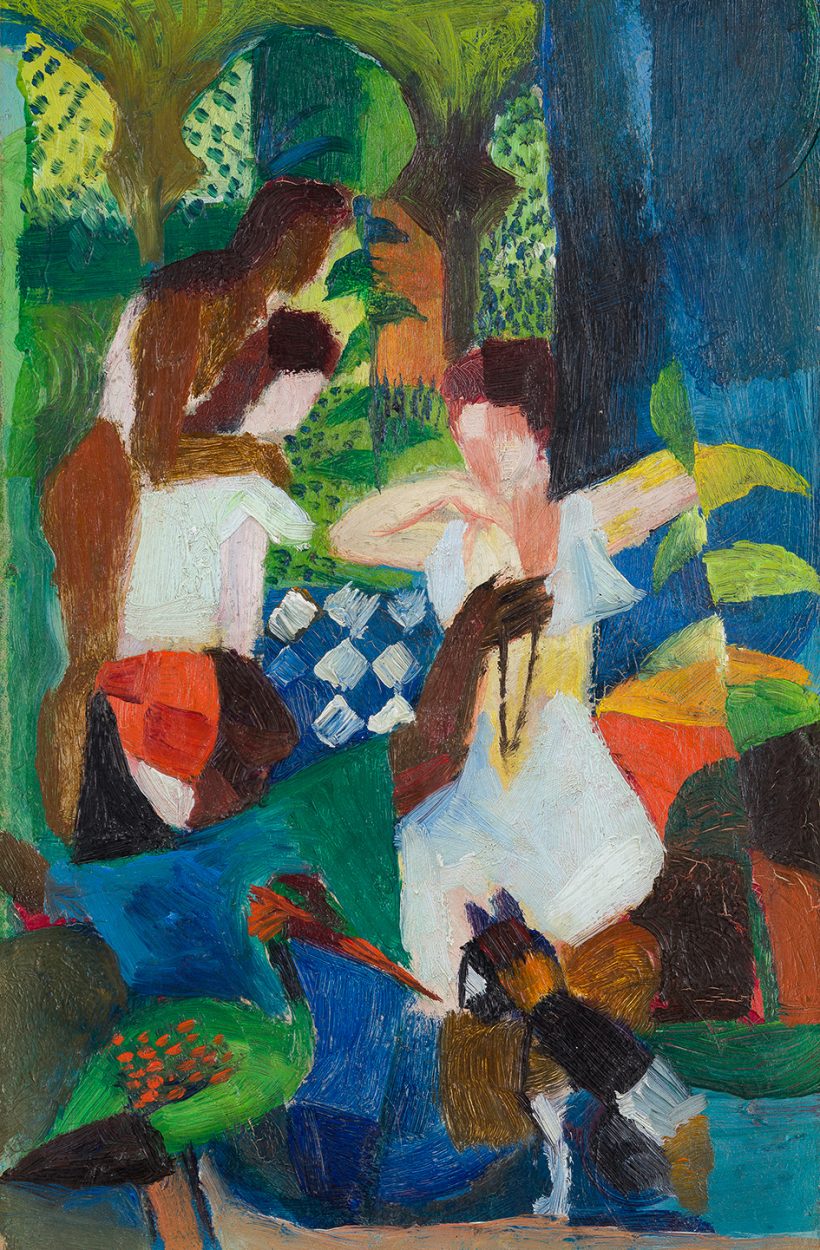
August Macke, Turkish Jeweller, 1914, oil on cardboard, 30 × 18 cm, Leopold-Hoesch-Museum, Düren
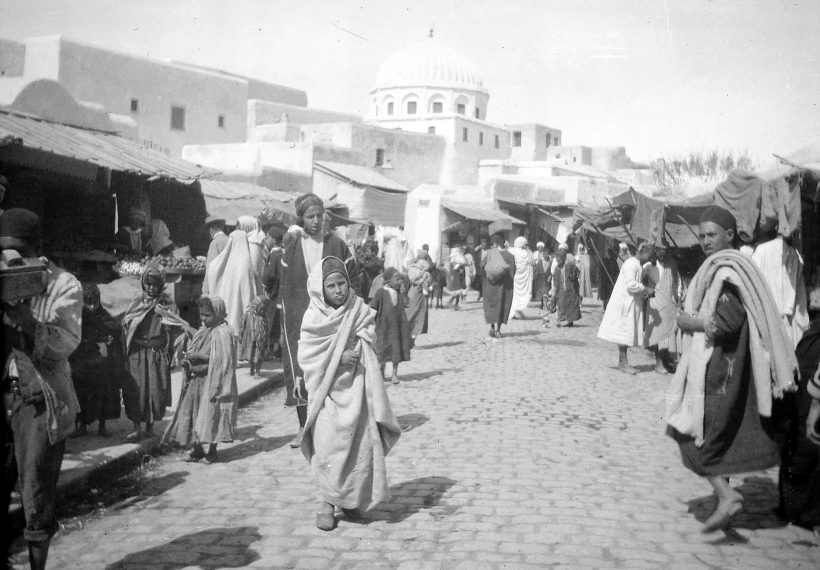
Gabriele Münter, Kairouan – Rue Saussier, View towards the North, 1905, photography, Gabriele Münter- und Johannes Eichner-Stiftung
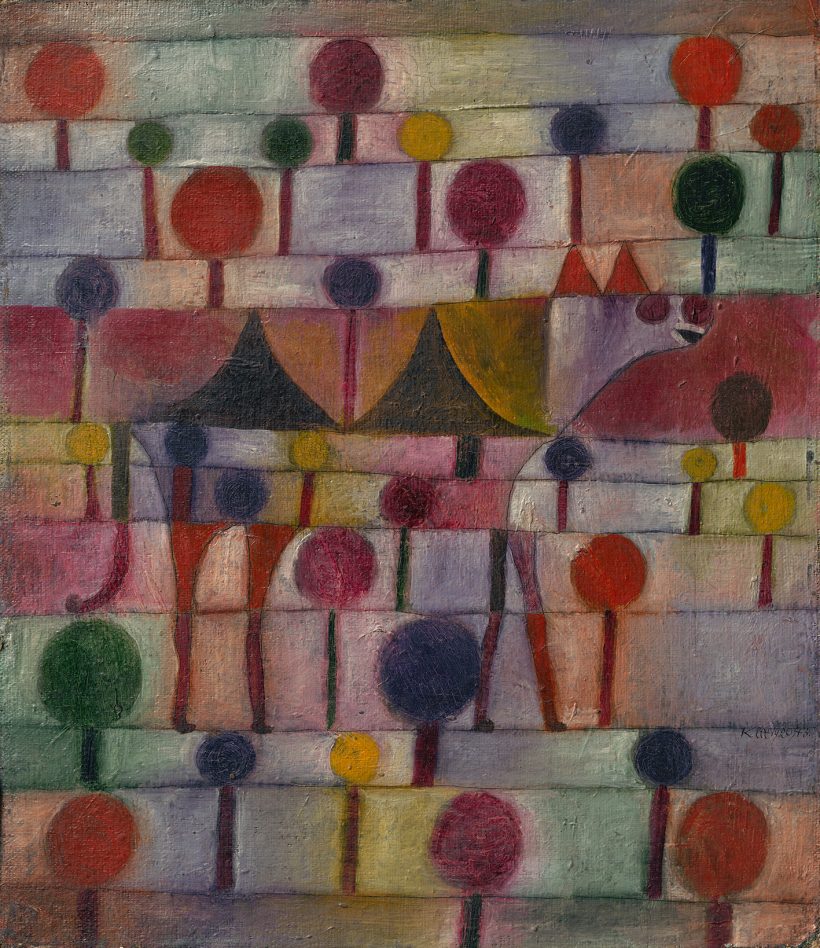
Paul Klee, Camel (in a rhythmic tree landscape), 1920, 43, oil and pen on a chalk ground on gauze mounted on board, with an unfinished colour study on the reverse, 48.3 × 42.5 cm, Kunstsammlung Nordrhein-Westfalen, Düsseldorf, acquired in 1966 from a donation by Westdeutscher Rundfunk
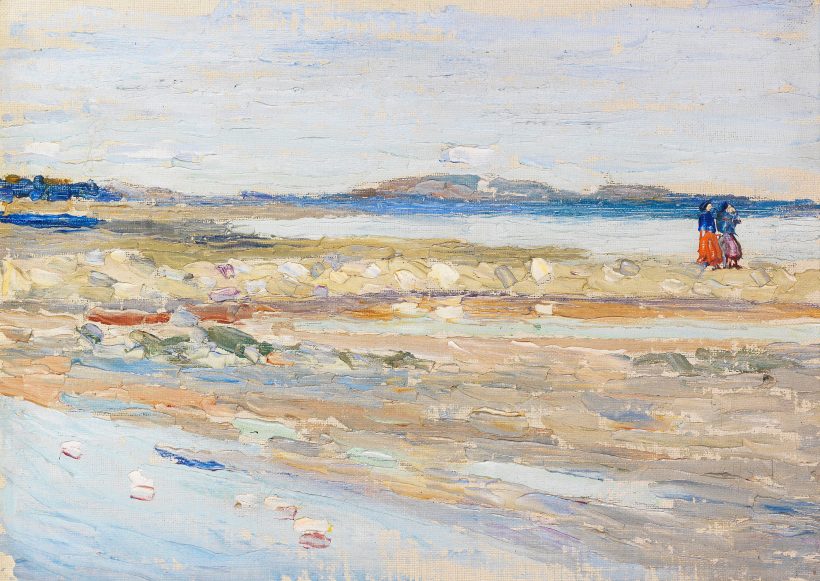
Wassily Kandinsky, Tunis – Beach, 1905, oil on canvas-mounted drawing board, 24 × 32.8 cm, private collection, southern Germany
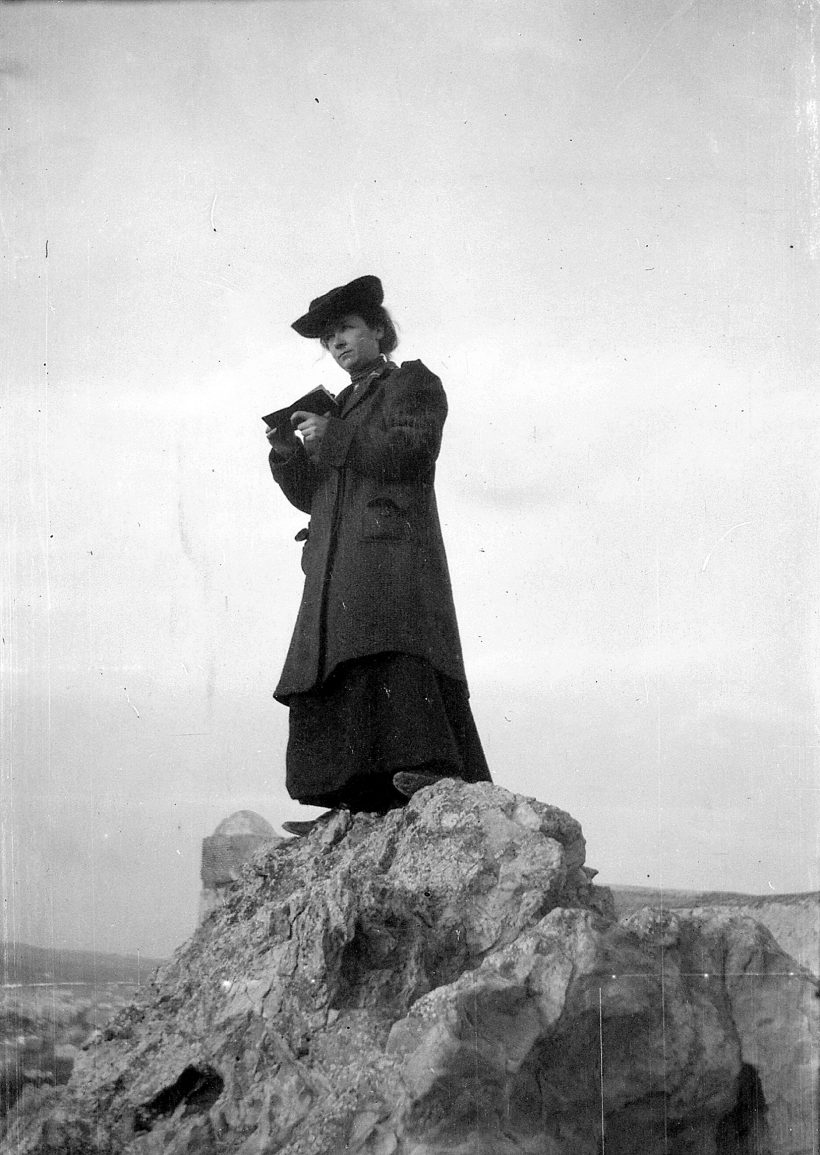
Wassily Kandinsky, Münter sketching on a rock not far from the fortress of Sidi Bel-Hassen, 1905, photograph, Gabriele Münter and
Johannes Eichner Foundation
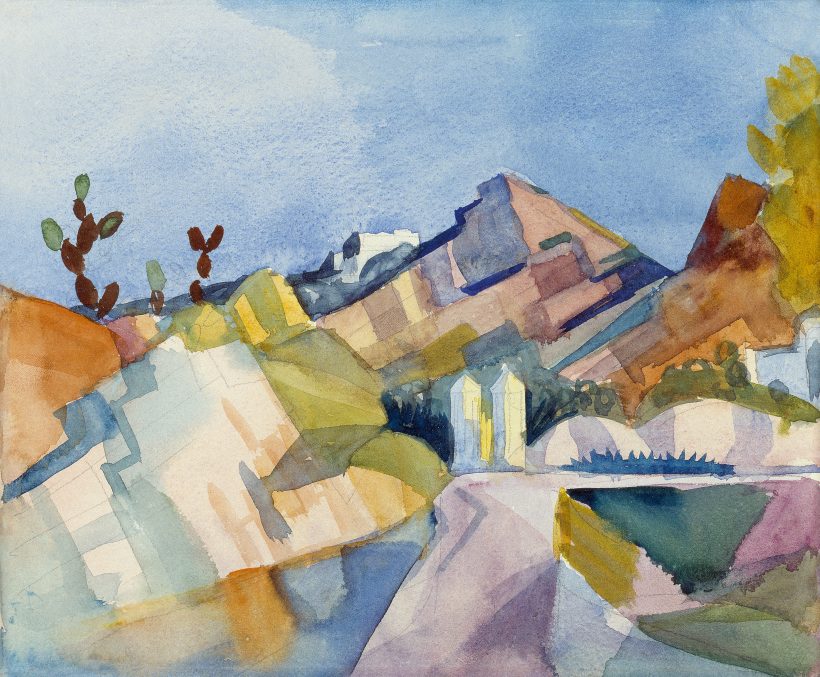
August Macke, Rocky Landscape, 1914, watercolour, 20 × 24 cm, Kurt and Barbara Alten Cultural Foundation, Museo Castello San Materno, Ascona
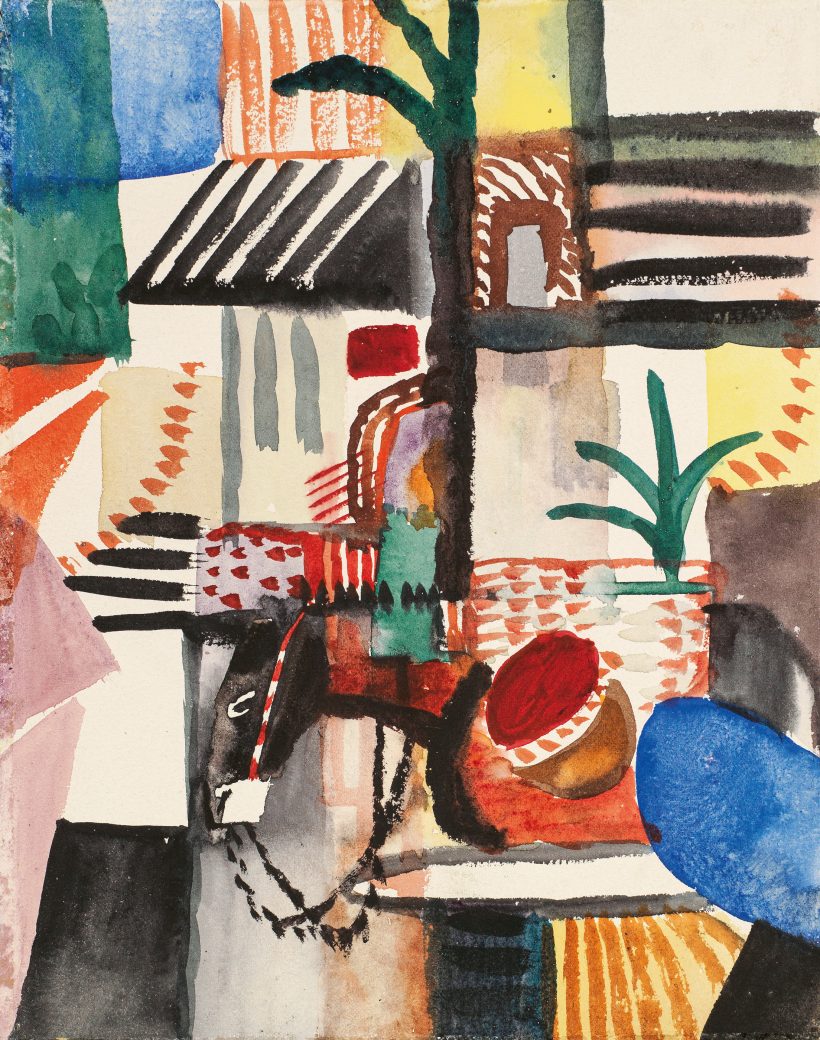
August Macke, Man with a Donkey (Tunis), 1914, watercolour on paper mounted on board, 26.6 × 20.8 cm, Kunstmuseum Bern
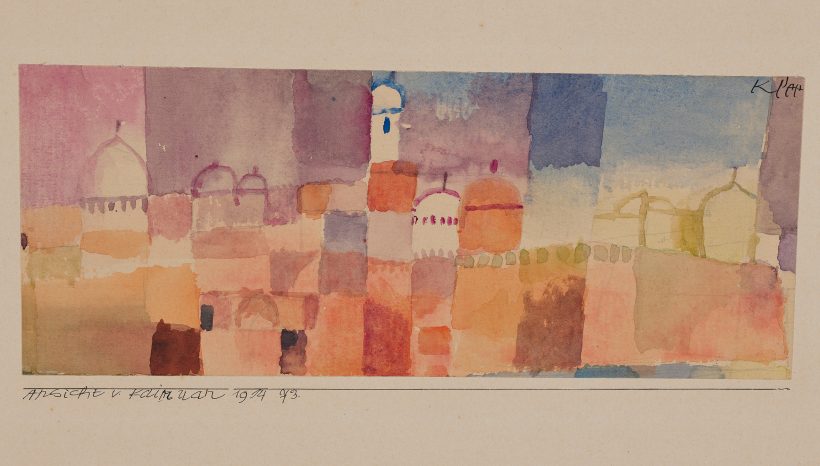
Paul Klee, View of Kairouan, 1914, watercolour and pencil on paper mounted on board, 8.4/8.2 × 20.7/21.1 cm, Franz Marc Museum, on permanent loan from a private collection
Audio guide
Light Becomes Colour
Use the audio guide to follow in the footsteps of Gabriele Münter and Wassily Kandinsky, as well as Paul Klee, August Macke and Louis Moilliet, on their journeys through Tunisia. In around 20 minutes, selected stops guide you through the exhibition. The audio guide shows how impressions from their travels were transformed into paintings, and places the artists’ perspectives within the colonial context of their time.
Hands-on Room
Light Becomes Colour
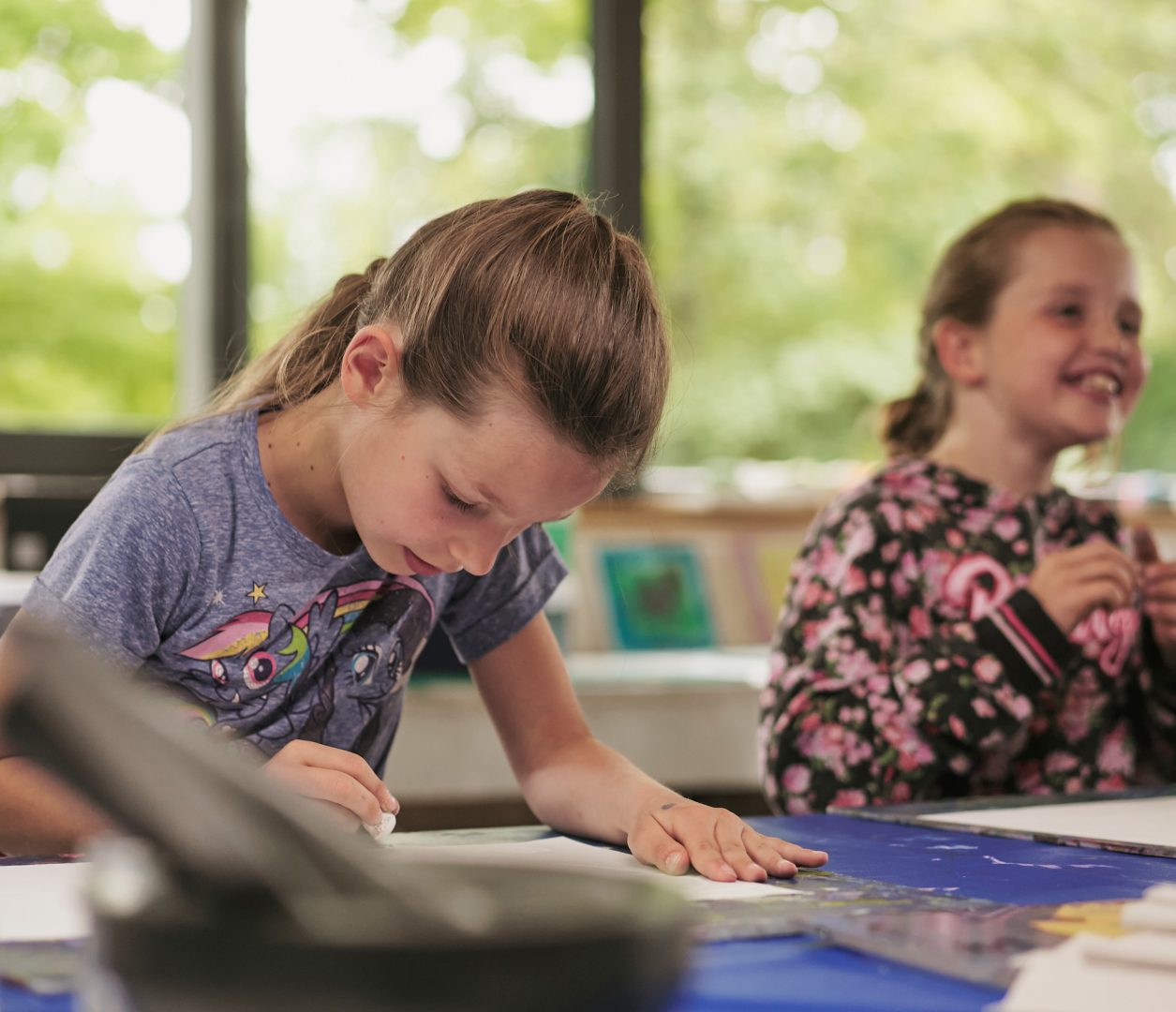
Paul Klee, August Macke and Louis Moilliet used watercolours to translate their impressions of their trip to Tunis into vibrant paintings. In the Hands-on Room, visitors can try out their techniques for themselves and experiment with colour. Watercolours and pencils encourage visitors to develop their own ideas for pictures and get creative.
Suitable for children and adults aged 5 and over.